MBA in Pharmaceutical Management

MBA in Pharmaceutical Management Admission 2025: Online Application and Entrance Exam

If you are aiming to become a leader in the pharmaceutical and healthcare sector, an MBA in Pharmaceutical Management is your gateway to success. With the booming demand for professionals who can manage drug development, marketing, and business operations, this MBA specialization is gaining immense popularity. Admission to an MBA in Pharmaceutical Management involves clearing entrance exams, applying to colleges, and completing the selection process. Below is a detailed guide covering eligibility, exams, dates, and application process:

MBA in Pharmaceutical Management?

An MBA in Pharmaceutical Management is a 2-year postgraduate program that blends core management principles with pharmaceutical industry knowledge. It prepares students to handle product development, regulatory affairs, sales, marketing, and healthcare business strategies in pharma and biotech companies.

Overview of MBA in Pharmaceutical Management
Parameter Details
Duration
2 years (full-time)
Eligibility
Graduation in any stream with 50% (45% for reserved categories); Some colleges may require science/pharma background
Admission Process
Entrance exams like CAT, MAT, NMAT, SNAP, CMAT + Group Discussion & Interview
Top Colleges
NMIMS Mumbai, Jamia Hamdard, NIPER Mohali, Manipal University, IIHMR University
Average Fees
₹4 – ₹12 lakhs (varies by institution)
Top Recruiters
Cipla, Dr. Reddy’s, Sun Pharma, Novartis, Pfizer, GSK, Lupin, Ranbaxy

MBA in Pharmaceutical Management Entrance Exam

Exam Colleges Accepting It
Tentative Dates (2024–25)
NMAT NMIMS Mumbai Oct – Dec 2024
CAT IIHMR, Jamia Hamdard, MIT-WPU
4th Sunday of November 2024
CMAT IIHMR, MIT-WPU, SIES, PIBM April 2025
MAT Many private institutes like MIT-WPU, SIES
Conducted 4 times a year
NIPER JEE NIPER Mohali, NIPER Hyderabad, NIPER Ahmedabad June 2025

MBA in Pharmaceutical Management Admission 2025

Admission for the MBA in Pharmaceutical Management for the 2025 academic year is either currently open or will commence shortly at various institutions across India. For 2025 admissions, the MBA in Pharmaceutical Management, a specialized two-year program, is accepting applications. Eligibility generally requires a bachelor’s degree (50% aggregate), with a background in pharmacy or life sciences often preferred. Admissions are primarily entrance-based, accepting scores from CAT, MAT, CMAT, XAT, NMAT, ATMA, and university-specific tests. Key institutions include NIPER, Jamia Hamdard, NMIMS, and IIHMR. The curriculum blends core management with specialized pharmaceutical topics like marketing, regulatory affairs, and supply chain. Interested candidates should check specific university and exam websites for accurate deadlines and application details.

Cheapest Online MBA Online MBA
MBA in Marketing
MBA Admission
Top MBA Colleges in India

Eligibility Criteria for Admission 2025

Before applying, make sure you meet the following eligibility requirements for mba in pharmaceutical management admission 2025 in india:

  • A Bachelor’s degree in Pharmacy, Life Sciences, Microbiology, Chemistry, Biotech, or any equivalent stream from a recognized university.
  • Minimum 50% marks in graduation (45% for reserved categories).
  • Final-year students are also eligible (provisional admission).

Important Admission Dates (Tentative 2025)

Event Tentative Date
NMAT 2025 Registration Aug – Oct 2024
CAT 2024 Registration Aug – Sep 2024
MAT 2024 (Dec) Oct – Nov 2024
NIPER JEE 2025 April – May 2025
GD/PI Rounds Jan – Apr 2025
Final Admissions & Orientation May – Jul 2025

Tips for Admission in MBA Pharmaceutical Management

  • Prepare for Exams: Start early for exams like NMAT, CAT, MAT, CMAT, or NIPER JEE depending on your target college.
  • Academic Background: While not always mandatory, having a B.Pharm, B.Sc (Biology, Chemistry) or related background is preferred.
  • Work Experience: Some institutes prefer or give weightage to candidates with work experience in pharma/healthcare.

MBA Pharmaceutical Management Admission Process

  • Step 1: Entrance Exam Appear and qualify for the entrance exam accepted by your preferred college.
  • Step 2: Apply to College Fill online application form on the official college website. Upload documents and pay the fee.
  • Step 3: Shortlisting Based on your exam score, academic profile, and sometimes work experience.
  • Step 4: GD-PI Rounds Group Discussion / Written Ability Test / Personal Interview (depends on college).
  • Step 5: Final Offer Colleges send offer letters based on merit.
  • Step 6: Admission Confirmation Pay the first installment of the fee and confirm admission.

Documents Required at Admission

  • Class 10 & 12 Mark Sheets

  • Graduation Degree / Provisional Certificate

  • Entrance Exam Scorecard (CAT/NMAT/etc.)

  • ID Proof (Aadhaar Card, PAN, etc.)

  • Passport-sized Photos

  • Category Certificate (if applicable)

MBA in Pharmaceutical Management Fees

The overall fee range for an MBA in Pharmaceutical Management in India varies significantly between government and private institutes. Government colleges like NIPER Mohali and Jamia Hamdard University offer affordable programs typically costing between ₹2 to ₹3 lakhs for the full two-year course, benefiting from government subsidies that make quality education accessible. On the other hand, private institutes such as NMIMS Mumbai, IIHMR University Jaipur, and MIT-WPU Pune charge higher fees ranging from ₹5.5 to ₹14 lakhs, reflecting their investment in advanced infrastructure, industry collaborations, international exposure, and strong placement opportunities. Aspirants seeking cost-effective education with solid academics often prefer government institutes, while those aiming for premium facilities and broader networking options may consider private B-schools despite the higher financial commitment.
Top MBA in Pharmaceutical Management Colleges in India
College Location Entrance Exam Approx. Fees
NMIMS – School of Business Management Mumbai NMAT by GMAC
₹11–12 Lakh (2 years)
Jamia Hamdard University New Delhi CAT / MAT / University Test
₹2–3 Lakh (2 years)
NIPER – Mohali (Pharma MBA) Punjab (Mohali) NIPER JEE
₹2.5–3 Lakh (2 years)
IIHMR University Jaipur CAT / MAT / CMAT / ATMA
₹5.2 Lakh (2 years)
Pune Institute of Business Management Pune CAT / CMAT / MAT / ATMA
₹6–7 Lakh (2 years)
MIT World Peace University Pune CAT / MAT / XAT / MAH-CET
₹6–7 Lakh (2 years)
SIES College of Management Studies Navi Mumbai CAT / MAT / XAT / CMAT
₹6–7 Lakh (2 years)
Delhi Pharmaceutical Sciences & Research University (DPSRU) Delhi DPSRU Entrance / GPAT
₹1–2 Lakh (2 years)

MBA in Pharmaceutical Management in Delhi

Delhi and NCR have a few reputed institutes offering MBA in Pharmaceutical Management, particularly Jamia Hamdard and DPSRU, which are top choices for pharma graduates. If you’re looking for broader exposure and private universities with better infrastructure, Amity and Sharda are also strong options.

College Name Eligibility Location Approx. Fees (2 Years)
Jamia Hamdard University Bachelor’s in Pharmacy, Science, or Management New Delhi ₹2.5 – ₹3 Lakhs
Delhi Pharmaceutical Sciences and Research University (DPSRU) BPharm/BSc/MBBS/BDS/BTech (Biotech/Chemistry) New Delhi (Pushp Vihar) ₹1 – ₹2 Lakhs
Amity University Graduation + Entrance exam (MAT/CAT/GMAT, etc.) Noida (NCR) ₹6 – ₹8 Lakhs
Sharda University Graduation in Life Sciences/Pharma/Medical Greater Noida (NCR) ₹3 – ₹5 Lakhs
Galgotias University Graduation in Pharma, Medical, or Science Greater Noida (NCR) ₹2.5 – ₹3.5 Lakhs

MBA in Pharmaceutical Management Admission 2025 IGNOU

IGNOU does not offer a specific MBA in Pharmaceutical Management. However, it provides related programs that cater to the healthcare and pharmaceutical sectors. One such program is the Master of Business Administration in Health Care and Hospital Management (MBAHCHM), designed to develop a trained workforce for healthcare institutions and hospitals across India, including remote areas.

1. How can I get admission in MBA in Pharmaceutical Management?

  • Step 1: Meet the eligibility criteria — a bachelor’s degree in Pharmacy, Science, or related fields with minimum 50% marks.
  • Step 2: Prepare and appear for relevant entrance exams like CAT, MAT, CMAT, NMAT, or NIPER JEE.
  • Step 3: Apply to colleges that offer MBA Pharma Management, submit application forms, and attend group discussions and personal interviews if required.
  • Step 4: Based on entrance exam score, academic record, and interview performance, you will get admission offers.

2. Is it worth doing an MBA in Pharmaceutical Management?

  • Yes, it is worth it if you want to combine management skills with pharmaceutical industry knowledge. The pharmaceutical sector is rapidly growing, and companies need managers skilled in product development, marketing, regulatory affairs, and supply chain management. This MBA opens doors to leadership roles with attractive salaries.

3. Which MBA is best for pharma?

  • The best MBA for pharma is usually MBA in Pharmaceutical Management or MBA in Healthcare Management. These specializations focus on the pharma industry’s unique challenges and opportunities, including drug marketing, sales, regulatory compliance, and healthcare policies.

4. What is the cut off for MBA in Pharmaceutical Management?

  • Cutoffs vary by college and entrance exam. For example:

    • CAT: Percentile cutoff may range from 60 to 85 depending on the college.

    • NMAT: Score cutoff is generally around 150-200 out of 360.

    • MAT/CMAT: Percentile cutoff could be 60-75.
      Always check individual college websites for exact cutoffs for 2025 admissions.

5. Which entrance exam is best for Pharma MBA?

  • The best exam depends on your target college:

    • CAT is widely accepted by reputed business schools offering pharma MBA.

    • NMAT is accepted by colleges like NMIMS Mumbai, which have strong pharma management programs.

    • NIPER JEE is specific for pharmaceutical education in National Institutes of Pharmaceutical Education and Research.

    • CMAT/MAT are good options for many private colleges.
      Choose based on your preferred college’s accepted exams.

6. What is the salary of MBA in pharma?

  • Starting salary: ₹5-8 lakh per annum for freshers in India.
  • With experience: ₹10-20 lakh per annum or more, especially in product management or leadership roles.
  • Internationally: Salaries can be significantly higher, depending on country and company.

7. What is the highest package for MBA in Pharmaceutical Management?

  • Top packages can go up to ₹30-40 lakh per annum or higher in multinational pharmaceutical companies or specialized consulting firms, especially with relevant work experience and from premier institutes.

8. Which is better M Pharm or MBA in Pharmaceutical Management?

  • M Pharm is more technical and research-oriented, focused on drug development, formulation, and clinical trials.
  • MBA Pharma Management is management-focused, ideal if you want leadership roles in marketing, sales, or business operations in pharma.
  • Choose M Pharm if you want a technical/research career; choose MBA Pharma if you want to move into business and management roles.

9. Which MBA specialization is best?

  • The best MBA specialization depends on your career goals, but popular options include:

    • Pharmaceutical Management (for pharma industry roles)

    • Healthcare Management (broader healthcare sector)

    • Marketing (widely applicable in pharma sales/marketing)

    • Operations & Supply Chain (critical for pharma logistics)

    • Finance (for pharma financial management roles)
      Choose based on your interests and the industry you want to work in.

After MBA

What Can I Do After MBA in 2025? Career Paths, Opportunities & Future Scope

Wondering what lies ahead after your MBA in 2025? Whether you’ve specialized in marketing, finance, HR, pharmaceutical management, or any other domain, an MBA opens up a world of opportunities. With industries evolving rapidly due to digital transformation, AI, and sustainability trends, MBA graduates are uniquely positioned to lead the change.

This blog explores top career options, sectors hiring in 2025, salary expectations, and smart moves to shape your post-MBA journey.

MBA Still Holds Value in 2025

Despite the rise of specialized certifications and AI tools, an MBA continues to be one of the most powerful postgraduate degrees for building leadership, strategic thinking, and problem-solving abilities. In 2025, companies are prioritizing business professionals who not only understand the market but also how to innovate, lead teams, and scale operations.

Top Career Options After MBA in 2025 List

Let’s explore popular and emerging roles you can pursue:

1. Product Manager

  • Industries: Tech, Pharma, Retail, FinTech

  • What you do: Develop and manage products from concept to launch.

  • Salary Range: ₹10–25 LPA (India), $90K–$150K (Abroad)

2. Business Consultant / Management Consultant

  • Industries: Consulting firms, Corporates

  • What you do: Advise companies on growth, efficiency, and strategy.

  • Top Firms: McKinsey, BCG, Bain, Deloitte

  • Salary Range: ₹12–30 LPA+

3. Financial Analyst / Investment Banker

  • Industries: Banking, FinTech, Investment firms

  • What you do: Analyze financial performance, investment opportunities.

  • Salary Range: ₹8–25 LPA+

4. Marketing Manager / Digital Marketing Head

  • Industries: FMCG, Tech, Pharma, Startups

  • What you do: Drive branding, sales, and digital strategy.

  • Skills in Demand: SEO, performance marketing, AI-based targeting

  • Salary Range: ₹6–18 LPA+

5. Human Resource Manager

  • Industries: All major industries

  • What you do: Recruitment, performance management, employee engagement.

  • Salary Range: ₹5–15 LPA

6. Pharmaceutical / Healthcare Manager

  • Specialization Needed: MBA in Pharmaceutical Management

  • Roles: Product Manager, Sales Head, Regulatory Affairs Officer

  • Top Recruiters: Sun Pharma, Pfizer, Novartis, GSK

  • Salary Range: ₹6–20 LPA

7. Entrepreneur / Startup Founder

  • Why MBA Helps: Strategic thinking, networking, leadership skills

  • Support: Startup India, incubators, venture capital

Emerging Career Trends for MBA Graduates in 2025

  • Sustainable Business Management: Firms are hiring professionals to lead green initiatives and ESG (Environmental, Social, Governance) policies.
  • AI & Data-Driven Decision Making: Business professionals with understanding of AI, analytics, and automation tools are in high demand.
  • Remote & Global Workforce Management: Post-COVID, managing hybrid teams and global operations is a key skill.
  • Health & Wellness Industry: A growing field where MBA graduates can work in hospital administration, wellness startups, and pharma marketing.
Important Posts
Cheapest Online MBA Online MBA
MBA in Marketing
MBA Admission
Top MBA Colleges in India

FAQs

Q1. Is MBA still worth it in 2025?
Yes! It provides critical business knowledge, leadership training, and vast career opportunities across sectors.

Q2. What is the best job after MBA?
Depends on your specialization. Product Manager, Consultant, Financial Analyst, and Pharma Marketing Head are among the top options.

Q3. Can I work abroad after MBA in India?
Yes, many Indian MBA grads get placed abroad or find opportunities via networking and international applications.

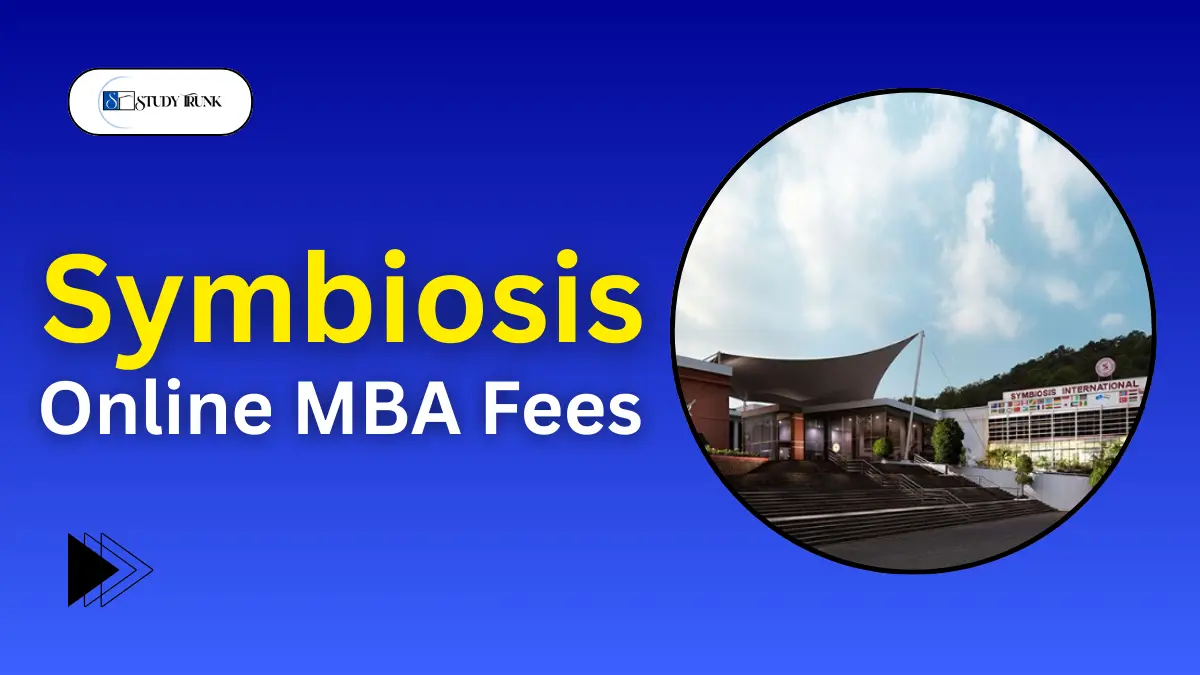
Online MBA

Online MBA Admission 2025: Courses, Colleges, Fees, and More

In today’s fast-paced world, continuous learning and upskilling are no longer optional – they’re essential for career advancement. Among the various postgraduate degrees, the Master of Business Administration (MBA) stands out as a powerful catalyst for professional growth. Recognizing the constraints of time and location for many aspiring business leaders, the Online MBA has emerged as a popular and effective alternative to traditional full-time programs in India. Its flexibility and accessibility have made it a go-to choice for working professionals seeking to enhance their business acumen without disrupting their careers.

An MBA equips you with a comprehensive understanding of business principles, strategic thinking, leadership skills, and a valuable professional network. It can open doors to higher-level management roles, career transitions, and increased earning potential.

What is an Online MBA?

An Online MBA is a postgraduate business degree delivered through digital platforms. It offers the same curriculum and academic rigor as a regular MBA but with the added convenience of online learning.

Features of an Online MBA

  • Flexibility: Study at your own pace and schedule, fitting learning around your work and life.
  • Accessibility: Learn from anywhere with an internet connection, eliminating geographical barriers.
  • Cost-effectiveness: Often more affordable than traditional on-campus programs due to lower overhead costs.
  • Interactive Learning: Utilizes various online tools like video lectures, discussion forums, virtual classrooms, and online assignments to facilitate learning.
  • Networking Opportunities: Many programs incorporate online group projects, virtual networking events, and even optional on-campus sessions to foster connections.

Difference between Online MBA and Regular MBA

Feature Online MBA Regular MBA
Delivery Primarily online, may include some on-campus components Primarily in-person, on campus
Flexibility Highly flexible, self-paced learning Less flexible, fixed schedules and locations
Cost Generally more affordable Generally more expensive
Networking Primarily virtual, with potential for limited in-person interaction Primarily in-person, with ample opportunities for direct interaction
Learning Style Self-directed, requires strong time management Structured, collaborative learning environment
Career Impact Increasingly recognized by employers Well-established recognition among employers

Online MBA for Working Professionals

The Online MBA is specifically designed to cater to the needs of working professionals. It allows them to continue their careers while gaining valuable business knowledge and credentials, making it a strategic investment in their future.

(Master of Business Administration) Online MBA Posts
MBA Marketing Syllabus
Cheapest Online MBA
Best Online Master Degrees in India

Online MBA Admission 2025

Getting into an Online MBA program requires careful planning and timely execution. Here’s what you need to know about the Online Master of Business Administration Admission process for 2025.

Online MBA Course Admission Process Overview

The admission process for most Online MBA programs generally involves the following steps:

  1. Registration: Creating an account on the university’s admission portal.
  2. Application Form: Filling out the online application form with personal, academic, and professional details.
  3. Document Submission: Uploading required documents (see below).
  4. Entrance Exam (if applicable): Appearing for and submitting scores of accepted entrance exams or university-specific tests.
  5. Personal Interview (if shortlisted): Participating in a virtual interview to assess your communication skills and fit for the program.
  6. Offer of Admission: Receiving an admission offer if you meet the criteria and perform well in the selection process.
  7. Fee Payment: Paying the admission fee to secure your seat.

Online MBA Course Documents required

 The specific documents required may vary between institutions, but generally include.

  • Bachelor’s degree certificate and mark sheets.
  • Passport-size photographs.
  • Identity proof (Aadhar card, PAN card, passport, etc.).
  • Address proof.
  • Work experience certificates (if applicable).
  • Entrance exam scorecards (CAT, MAT, XAT, CMAT, GMAT, etc., if applicable).
  • Statement of Purpose (SOP) or essay.
  • Letters of Recommendation (LORs) (if required).

4. How to Get Online MBA Admission?

Here’s a step-by-step guide to navigate the Online MBA admission process.

  1. Research and Shortlist Colleges: Identify universities and business schools offering Online MBA programs that align with your career goals, specialization interests, and budget. Consider factors like accreditation (UGC, AICTE, NAAC), program structure, faculty, alumni network, and fees.
  2. Check Eligibility: Carefully review the eligibility criteria of each shortlisted college, including academic qualifications, work experience requirements, and accepted entrance exams.
  3. Prepare for Entrance (if required): If the colleges you are targeting require an entrance exam, start your preparation well in advance. Understand the syllabus, practice with mock tests, and develop a strategic approach.
  4. Fill out Application Forms: Once you’ve finalized the colleges you want to apply to, visit their official websites and fill out the online application forms accurately and completely. Pay attention to all instructions and deadlines.
  5. Submit Documents and Fees: Upload the required documents in the specified format and pay the application fee through the online payment gateway provided by the university. Ensure you keep a record of your application and payment confirmation.

5. Online MBA Eligibility Criteria

While specific eligibility criteria can vary across institutions, here are some common requirements for Online MBA programs in India.

  • Academic Qualifications: Generally, a bachelor’s degree in any discipline from a recognized university with a minimum aggregate score (usually 50% or equivalent). Some universities may also accept candidates with a professional qualification (e.g., CA, CS, ICWA).
  • Work Experience (if any): Some top-tier Online MBA programs may require a certain number of years of work experience (e.g., 2-3 years). However, many programs are also open to fresh graduates. Check the specific requirements of you

6. Online MBA Entrance Exam 2025

For admission to many top Online MBA programs in India in 2025, you might need to appear for one or more of the following entrance exams.

  • CAT (Common Admission Test): Conducted by the Indian Institutes of Management (IIMs), CAT is a highly competitive exam for admission to postgraduate management programs across India.
  • MAT (Management Aptitude Test): Conducted by the All India Management Association (AIMA), MAT is held multiple times a year and is accepted by a large number of business schools.
  • XAT (Xavier Aptitude Test): Conducted by XLRI Jamshedpur, XAT is another prominent national-level entrance exam.
  • CMAT (Common Management Admission Test): Conducted by the National Testing Agency (NTA), CMAT is a national-level entrance exam for admission to management programs approved by AICTE.
  • GMAT (Graduate Management Admission Test): A globally recognized exam, GMAT scores are accepted by some top Online MBA programs in India, especially those with international collaborations or focus.
  • University-Specific Exams: Some universities conduct their own entrance exams for their Online MBA programs. You will need to check the admission guidelines of the specific universities you are interested in.

7. Online MBA Courses & Programs

Online MBA programs offer a variety of specializations to cater to different career interests and industry demands. Some of the popular specializations include.

  • Finance: Focuses on financial management, investment analysis, corporate finance, and banking.
  • Marketing: Covers areas like brand management, digital marketing, market research, and advertising.
  • Human Resources (HR): Deals with talent acquisition, employee relations, compensation and benefits, and organizational development.
  • Information Technology (IT): Explores the application of technology in business, IT management, and digital transformation.
  • Data Analytics: Focuses on collecting, analyzing, and interpreting data to drive business decisions.
  • Operations Management: Deals with optimizing production processes, supply chain management, and logistics.

8. Best Online MBA Colleges in India

Choosing the right college for your Online MBA is a critical decision that can significantly impact your career trajectory. The following are some of the factors that make a college stand out for its Online MBA program.

  • UGC/AICTE Approval: Ensures the legitimacy and recognition of the degree.
  • NAAC Accreditation: Indicates the quality of education and infrastructure. A higher NAAC grade (like A+) signifies excellent standards.
  • Reputation and Ranking: A well-established reputation and good ranking reflect the quality of the program and its acceptance in the industry.
  • Faculty: Experienced and knowledgeable faculty members contribute significantly to the learning experience.
  • Curriculum: A relevant and industry-oriented curriculum ensures that you gain the necessary skills and knowledge.
  • Learning Platform and Support: A user-friendly online learning platform and adequate student support are crucial for a smooth learning journey.
  • Networking Opportunities: Opportunities for interaction with peers and faculty, even in an online setting, are valuable.
  • Placement Assistance: While Online MBAs are often pursued by working professionals, some institutions may offer career support services.
College/University Accreditation Key Highlights
Amity University Online UGC-DEB, NAAC A+ One of the first UGC-recognized online MBA programs in India
NMIMS Global (SVKM’s NMIMS) UGC-DEB, NAAC A+ Strong industry connect and reputed for working professionals
Symbiosis Centre for Distance Learning UGC-DEB, AICTE Offers a wide range of specializations
Manipal University Jaipur Online UGC-DEB, NAAC A+ Interactive platform with real-world case studies
IGNOU (Indira Gandhi National Open University) UGC-DEB, AICTE Highly affordable and government-recognized
ICFAI University UGC-DEB Offers career support and flexible learning
Lovely Professional University (LPU) UGC-DEB, NAAC A++ Strong infrastructure and online support system
Chandigarh University (CU Online) UGC-DEB, NAAC A+ Affordable fees and placement support
Jain University (Online) UGC-DEB, NAAC A++ Offers international exposure and specialized MBA programs
DY Patil University (Online) UGC-DEB, NAAC A Offers flexible learning with placement assistance

10. Online MBA Fees

The cost of pursuing an Online MBA in India varies significantly depending on whether you choose a public or private university. While private institutions may offer more features and branding, public universities provide exceptional value at a much lower Online MBA Fees.

University/College Type Total Fees (₹) EMI/Financing Available Value-for-Money Rating
IGNOU Public ₹37,800 No EMI, but extremely affordable ★★★★★
NMIMS Global (SVKM’s NMIMS) Private ₹1,68,000 Yes (EMI options available) ★★★★☆
Amity University Online Private ₹1,79,000 Yes (0% EMI) ★★★★☆
Manipal University Jaipur (Online) Private ₹1,50,000 Yes (Flexible payment options) ★★★★☆
Symbiosis SCDL Private ₹70,000 – ₹85,000 Limited EMI options ★★★★
LPU Online Private ₹1,56,000 Yes (Monthly EMI available) ★★★★☆
Chandigarh University (CU Online) Private ₹1,20,000 Yes (EMI and scholarships) ★★★★☆
Jain University (Online) Private ₹1,30,000 Yes (EMI and merit scholarships) ★★★★☆
DY Patil University (Online) Private ₹1,40,000 Yes (EMI available) ★★★★
ICFAI University Private ₹80,000 – ₹1,20,000 Yes (EMI available) ★★★★

Is Online MBA Worth It?

Yes, an Online MBA is increasingly worth it—especially for working professionals, entrepreneurs, or those seeking career advancement without leaving their job. With recognized universities offering UGC-approved degrees, flexible learning options, and growing employer acceptance, online MBA programs now deliver strong ROI in terms of skills, career growth, and salary hikes.

Career Scope and Salary Growth (50 Words)

An Online MBA can significantly boost your career, especially for working professionals. It enhances leadership, strategic thinking, and business skills. Graduates often see better job roles and salary hikes ranging from 20% to 40%. Sectors like IT, finance, and consulting actively hire Online MBA graduates for mid-to-senior roles.

Pros and Cons (50 Words)

Pros: Flexible schedule, affordable fees, ideal for working professionals, and growing employer acceptance.
Cons: Limited in-person networking, requires strong self-discipline, and not all programs have strong brand value.
Choosing a reputed university and relevant specialization can offset most disadvantages and improve ROI.

Onlin MBA Course FAQs

  1. Which is the best Online MBA in India?
    Some of the best online MBA programs in India are offered by NMIMS Global, Amity University Online, Manipal University Jaipur, Symbiosis (SCDL), and Jain University. IGNOU is also a top choice for its affordability and government recognition. The best option depends on your budget, specialization, and career goals.
  2. Is online MBA recognized in India?
    Yes, an online MBA is recognized in India as long as it is offered by a university approved by UGC-DEB or AICTE. These degrees are valid for jobs, government exams, and higher education.
  3. Can working professionals do an online MBA?
    Yes, online MBA programs are ideal for working professionals. They offer flexible schedules, self-paced learning, and weekend or recorded classes, allowing students to continue working while studying.
  4. What is the average salary after an online MBA?
    The average salary after an online MBA ranges from ₹4 to ₹7 lakhs per year for fresh graduates. For working professionals, a salary hike of 20% to 40% is common depending on the industry, role, and work experience.
  5. Do I need to take an entrance exam for an online MBA?
    Not always. Many universities offer direct admission based on graduation marks or work experience. Some may require scores from exams like CAT, MAT, or their own entrance test, but this varies by institution.
University Posts
Amity University Noida Admission Mumbai University Admission
Raja Mahendra Pratap University Admission MDI Gurgaon Admission
Baba Farid University Admission Delhi University Admission
Jadavpur University Admission
Tezpur University PhD Admission

Tezpur University PhD Admission 2025: Registration Dates and Syllabus

Tezpur University, a prestigious Central University established in 1994 in Assam, India, is renowned for its focus on interdisciplinary research and academic excellence. Ranked 23rd in the NIRF 2023 university category and accredited with an A+ grade by NAAC, the university offers a wide range of PhD programs across its 27 departments under the Schools of Engineering, Sciences, Management, and Humanities and Social Sciences. This blog provides a comprehensive guide to the Tezpur University PhD Admission process for the 30 April 2025 session, covering eligibility, application procedures, selection criteria, important dates, and more.

Overview of Tezpur University PhD Programs

The PhD programs are offered in full-time, part-time, sponsored, and project fellow categories, with a typical duration of three years. The university emphasizes research in areas relevant to regional and national development, particularly in science, technology, and humanities. Tezpur University offers PhD programs in diverse fields, including:

  • School of Engineering: Computer Science & Engineering, Electronics & Communication Engineering, Mechanical Engineering, Civil Engineering, and more.
  • School of Sciences: Molecular Biology & Biotechnology, Physics, Chemistry, Mathematics, Environmental Science.
  • School of Humanities and Social Sciences: English, Hindi, Assamese, Sociology, Cultural Studies, Social Work, Mass Communication & Journalism.
  • School of Management Sciences: Commerce, Business Administration.
  • Interdisciplinary Areas: Renewable Energy, Biotechnology, Cultural Studies.

Eligibility Criteria for PhD Admission 2025

To apply for a PhD program at Tezpur University, candidates must meet the following eligibility requirements:

  • Educational Qualification: A Master’s degree in a relevant discipline from a recognized university with a minimum of 55% marks in aggregate or equivalent grade (50% for SC/ST/OBC/PWD candidates).

  • Relaxation: Candidates with a valid UGC NET-JRF, UGC-CSIR NET-JRF, UGC/CSIR NET (LS), SLET (LS), GATE, CEED, or M.Phil degree are exempt from the written test but must appear for a personal interview (PI).

  • Additional Requirements:

    • For specific departments (e.g., Molecular Biology & Biotechnology), candidates may need to meet additional criteria, such as qualifying GAT-B for MSc-PhD integrated programs.

    • Sponsored candidates or project fellows must submit a Sponsorship/No Objection Certificate (NOC) from their employer.

  • Final-Year Students: Candidates in their final year of a Master’s program can apply, provided they submit proof of passing with the required marks by November 30, 2025.

Application Process for PhD Admission 2025

The application process for Tezpur University PhD Admission 2025 is conducted online through the official admission portal. The last date to submit applications for PhD programs is 30 April 2025 (extended from earlier deadlines). The correction window for TUEE applicants will open after May 30, 2025. Follow these steps to apply:

  1. Register on the Portal:

    • Visit www.tezuadmissions.in and click “Sign Up” to create an account using a valid email ID and mobile number.

    • Ensure the contact details are accurate, as all communications will be sent to the registered email and phone.

  2. Fill the Application Form:

    • Log in to your dashboard and click “Apply Now.”

    • Select the PhD program and admission criterion (e.g., TUEE or exempted based on NET/GATE).

    • Enter personal details, academic qualifications (up to PG level), and contact information.

    • Specify program preferences if applying for multiple programs (up to three programs with a single application fee).

  3. Upload Documents:

    • Passport-size photograph (250×200 pixels, max 250 KB).

    • Scanned signature (150×200 pixels, max 50 KB).

    • Academic transcripts (certificates and mark sheets).

    • Valid scorecard for UGC NET, CSIR NET, GATE, CEED, or other relevant exams (if applicable).

    • Category certificate (SC/ST/OBC/PWD) issued by a competent authority, if applicable.

    • Sponsorship/NOC for sponsored candidates or employed applicants.

  4. Pay the Application Fee:

    • Application fee: INR 700 (INR 350 for SC/ST/PWD candidates).

    • Payment can be made via Credit/Debit Card, Net Banking, or NEFT.

    • The fee is non-refundable and covers up to three program applications.

  5. Submit and Save:

    • Preview the application, accept the declaration, and submit.

    • Download and print the submitted form for future reference, as it will be required during admission.

  6. Track Application Status:

    • Check the portal regularly for updates on shortlisting, exam schedules, and merit lists.

Selection Process for PhD Admission 2025

The selection process for Tezpur University PhD Admission 2025 involves the following stages:

  1. Entrance Examination (TUEE 2025):

    • Candidates without UGC NET-JRF, CSIR NET-JRF, NET (LS), SLET, GATE, CEED, or M.Phil must appear for the Tezpur University Entrance Examination (TUEE) 2025.

    • TUEE is scheduled from June 6 to June 8, 2025.

    • The exam covers subjects relevant to the chosen PhD discipline, based on the Master’s-level curriculum.

    • The syllabus and structure vary by department; candidates should refer to the official prospectus for details.

  2. Personal Interview (PI):

    • Shortlisted candidates, including those exempted from TUEE, must attend a personal interview.

    • The PI assesses research aptitude, subject knowledge, and alignment with the department’s research priorities.

    • For specific programs (e.g., Molecular Biology & Biotechnology), a second round of PI may be conducted.

  3. Final Selection:

    • Final selection is based on:

      • TUEE scores (for non-exempted candidates).

      • Performance in the personal interview.

      • Academic qualifications and overall profile.

    • A merit list will be published on the university’s website, followed by counseling and document verification.

  4. Special Provisions:

    • Candidates applying under reserved categories (SC: 15%, ST: 7.5%, OBC: 27%) must submit valid certificates during document verification.

    • North-Eastern candidates may need to upload a Permanent Residence Certificate (PRC) for certain programs.

Important Dates for PhD Admission 2025

Candidates should regularly check www.tezuadmissions.in for updates, as dates may be revised. Here are the key dates for the Tezpur University PhD Admission 2025 process:

  • Application Start Date: Ongoing (as of April 2025).
  • Last Date to Apply: April 30, 2025.
  • TUEE 2025 Examination: June 6–8, 2025.
  • Correction Window: Opens after May 30, 2025.
  • Personal Interview (PI): To be announced (typically July 2025).
  • Merit List Release: To be announced.
  • Counseling and Admission: To be announced (likely July–August 2025).

Fee Structure and Scholarships

PhD Program Fees

Exact fees should be confirmed on the official website, as they may vary by specialization.

  • Total Fee: Approximately INR 1,07,758 for the full program (may vary for full-time vs. part-time modes).
  • Semester Fees: Range from INR 13,143 to INR 50,643, depending on the department and facilities.
  • Application Fee: INR 700 (INR 350 for SC/ST/PWD).

Scholarships

To apply, students must submit a scholarship application form with required documents (e.g., income certificate, caste certificate) via the university website. Tezpur University offers various scholarships to support PhD scholars:

  • Means-cum-Merit Scholarship: INR 3,000/month for students with a family income below INR 2.5 lakh per annum.
  • Sports Scholarship: INR 10,000/year for students excelling in sports.
  • Cultural Scholarship: INR 10,000/year for cultural achievements.
  • Other Scholarships: Available based on merit, economic background, or reserved categories.

Facilities and Research Opportunities

Tezpur University provides a conducive environment for research, with state-of-the-art facilities:

  • Central Library: Over 86,654 books, 10,360+ e-journals, and access to e-ShodhSindhu and DeLCON consortia.
  • Health Center: Equipped with ECG, ultrasound, and X-ray machines, offering 24/7 emergency services.
  • Hostels: Separate facilities for boys and girls with Wi-Fi, mess, and recreational amenities.
  • Research Centers: Focus on renewable energy, biotechnology, and cultural studies, fostering interdisciplinary research.
  • Placement Support: The university has a strong placement record, with top recruiters like Wipro, Amazon, and Asian Paints offering median salaries of INR 6–7 LPA.

Contact Information

For queries related to PhD admission, candidates can contact:

  • Email: tuee2025@tezu.ernet.in
  • Helpline: +91-3712-273149, +91-3712-273169
  • Technical Queries: +91-8399894076, +91-9864013569
  • General Queries: Available Monday to Friday, 9:30 AM to 5:30 PM.
  • Official Website: www.tezuadmissions.in or www.tezu.ernet.in

Tips for Applicants

  • Prepare Early: Review the prospectus and ensure you meet eligibility criteria before applying.
  • Document Checklist: Keep scanned copies of all required documents ready to avoid last-minute issues.
  • TUEE Preparation: Study the Master’s-level syllabus for your discipline and practice previous years’ question papers.
  • Stay Updated: Monitor the admission portal for notifications on exam schedules, PI dates, and merit lists.
  • Contact Support: Reach out to the university for clarification on any doubts regarding the application or selection process.

Note: All dates and fees mentioned are based on available information as of May 13, 2025, and are subject to change. Always verify details on the official university website.

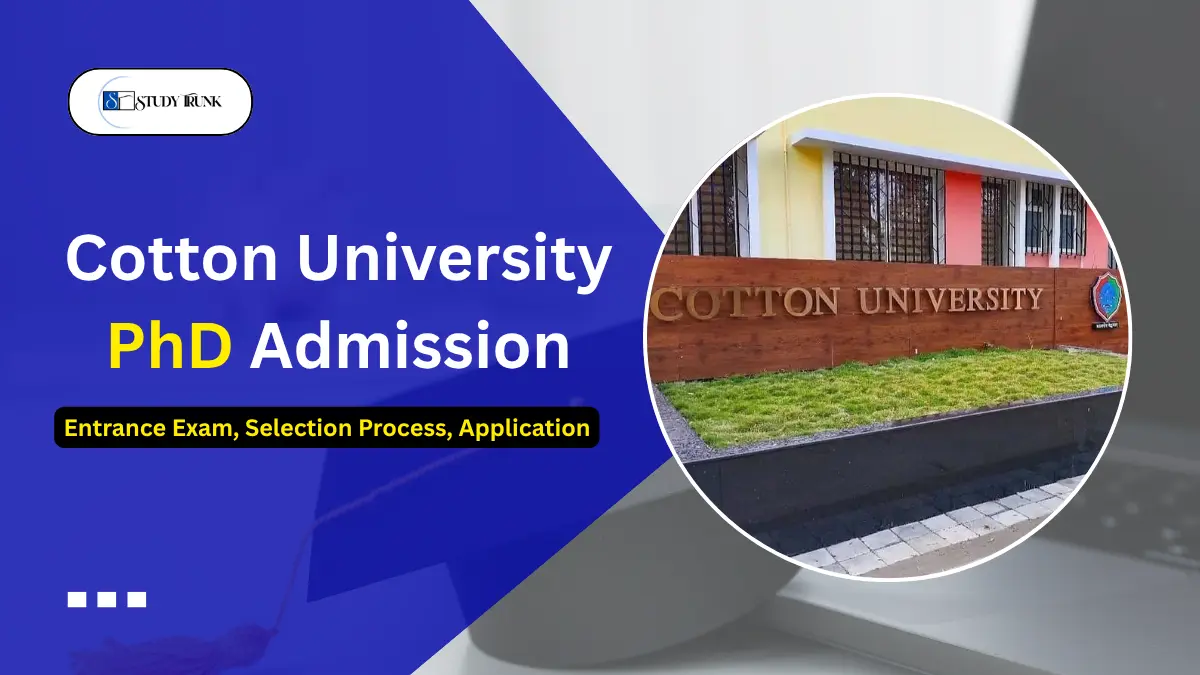
Cotton University PhD Admission

Cotton University PhD Admission 2025: Entrance Exam, Selection Process, Application,

Are you considering pursuing a PhD at Cotton University in 2025? This prestigious public state university in Guwahati, Assam, is known for its rich academic heritage and diverse research opportunities. In this blog, we’ll walk you through everything you need to know about Cotton University’s PhD admission process for the 2025-26 academic session, including eligibility, application steps, key dates, and tips to strengthen your application.

Pursuing a PhD at Cotton University is a gateway to advanced research and academic excellence in Northeast India. With a streamlined admission process, diverse disciplines, and strong support for scholars, it’s a promising destination for your doctoral journey. Start preparing early, keep an eye on the official website, and ensure your application is complete and accurate.

Why Choose Cotton University for Your PhD?

Cotton University, established in 1901 as Cotton College, is a UGC-recognized institution with an A++ NAAC accreditation. Ranked among India’s top 200 universities by NIRF, it offers a robust research environment across disciplines like Computer Science, Chemistry, Economics, History, and more. With advanced research facilities and a commitment to academic excellence, it’s an ideal choice for aspiring researchers.

PhD Programs at Cotton University

The university provides both regular and self-financing PhD programs, catering to diverse academic interests. Cotton University offers PhD programs in various departments, including but not limited to:

  • Arts: English, History, Sociology
  • Science: Physics, Chemistry, Mathematics, Environmental Biology
  • Social Sciences: Economics, Political Science
  • Technology: Computer Science & IT
  • Others: Library & Information Science, Mass Communication

Cotton University Important Dates for PhD Admission

Pursuing a PhD at Cotton University, a prestigious A++ NAAC-accredited institution in Guwahati, Assam, is a significant step toward a rewarding research career. This blog provides a clear guide to the Entrance Exam, Selection Process, Application Process, and Key Dates for Cotton University’s PhD Admission 2025-26.

Event Tentative Date
Application Start Date
Second Week of May 2025
Application Deadline
Third Week of May 2025
Entrance Test June/July 2025
Interview Dates July 2025
Merit List Announcement
July/August 2025
Counseling/Document Verification August 2025
Admission Completion August 2025

Eligibility Criteria for PhD Admission 2025

To apply for a PhD at Cotton University, candidates must meet the following requirements:

  • Academic Qualification: A Master’s degree or equivalent from a UGC-recognized university with at least 55% marks in aggregate (or equivalent grade) in a subject related to the PhD discipline.
  • Relaxation: A 5% relaxation in marks (from 55% to 50%) is available for SC/ST/OBC/PWD/EWS candidates, as per Assam government norms.
  • Final-Year PG Students: Candidates in their final semester of a Master’s program can apply, but admission is conditional on meeting the minimum eligibility criteria upon completion.

How to Apply for PhD Admission

The application process is fully online and straightforward. Follow these steps:

  1. Visit the Official Portal:

    • Go to admissions.cottonuniversity.ac.in.

  2. Register and Fill the Form:

    • Create an account, complete the online application form, and upload required documents (e.g., mark sheets, certificates, photo, signature).

    • Ensure eligibility: A Master’s degree with at least 55% marks (50% for SC/ST/OBC/PWD/EWS candidates) in a relevant discipline.

  3. Pay the Application Fee:

    • General/OBC: INR 1,200

    • SC/ST/PWD/EWS: INR 1,000

    • International Applicants: USD 100

    • Payment modes: UPI, Debit/Credit Card, or Net Banking.

  4. Submit and Track:

    • Submit the application before the deadline and download the confirmation receipt.

    • Monitor the portal for updates on admit cards, test schedules, and merit lists.

Entrance Exam for PhD Admission

The Cotton University PhD Entrance Test is a critical component of the admission process for candidates who are not exempt. Key details include:

  • Structure: The test carries 70 marks and is divided equally between Research Methodology (50%) and Subject-Specific Knowledge (50%).
  • Syllabus: Aligned with postgraduate-level curricula from leading Indian universities, covering core concepts in the chosen discipline.
  • Qualifying Marks: Candidates must score at least 50% to qualify for the personal interview.
  • Exemptions: Candidates with valid UGC-NET, CSIR-NET, GATE, ICMR, DBT, or similar national-level fellowship/scholarship qualifications are exempt from the entrance test. Those with NET (Category 2 or 3, June 2024 or later) also qualify for exemption and can directly appear for the interview.

Selection Process

The selection process for PhD admission at Cotton University is merit-based and involves the following steps:

  1. Entrance Test (70% Weightage):

    • Non-exempt candidates take the PhD Entrance Test.

    • Exempted candidates (e.g., those with national-level qualifications) are evaluated based on their fellowship/scholarship scores or equivalent metrics.

  2. Personal Interview/Viva Voce (30% Weightage):

    • Conducted by a panel to assess research aptitude, subject knowledge, and alignment with the department’s research priorities.

    • Candidates present their research interests or a preliminary research proposal.

  3. Final Merit List:

    • The combined score (70% entrance test/fellowship + 30% interview) determines the merit list.

    • Shortlisted candidates are invited for counseling or document verification, followed by fee payment to secure admission.

    • A second round of counseling may be held to fill vacant seats, if any.

Fees and Scholarships

  • PhD Course Fee: Approximately INR 85,460 (varies by specialization).

  • Application Fee: INR 1,200 (General/OBC), INR 1,000 (SC/ST/PWD/EWS).

  • Scholarships: Cotton University offers government-approved scholarships, including:

    • PG Indira Gandhi Scholarship for Single Girl Child

    • PG Scholarship for SC/ST students pursuing professional courses

    • Merit-based and need-based scholarships (income certificate required for some).

  • Candidates are advised to upload necessary documents for scholarship eligibility during the application process.

Tips to Strengthen Your PhD Application

  1. Prepare for the Entrance Test: Review postgraduate syllabi in your discipline and focus on research methodology. Practice previous years’ question papers, if available.
  2. Craft a Strong Research Proposal: During the interview, present a clear and feasible research idea aligned with the department’s expertise.
  3. Leverage National-Level Qualifications: If you have UGC-NET, CSIR-NET, or similar scores, highlight them to skip the entrance test and boost your profile.
  4. Stay Updated: Regularly visit admissions.cottonuniversity.ac.in for notifications and updates.
  5. Contact the University: For queries, reach out via the official portal or email provided on the website.
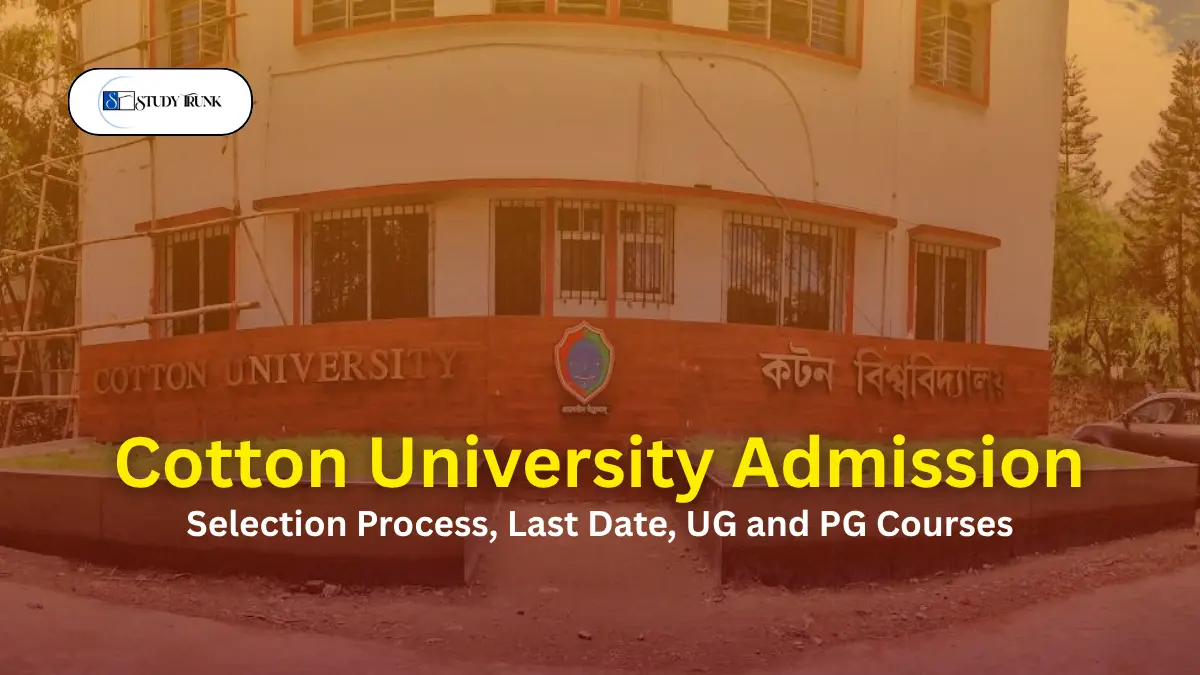
Cotton University Admission

Cotton University Admission 2025: Selection Process, Last Date, UG and PG Courses

The admission process for the 2025-26 academic session is set to begin in June 2025 for UG and PG courses, with the last date for online submissions tentatively on July 26, 2025. For PhD, applications are expected to open in the second week of May 2025, closing in the third week of May 2025. These dates may change, so check the official portal regularly. Fees vary by course, with UG ranging from INR 18,000 to 29,900, PG from INR 14,000 to 45,000, and PhD at INR 35,000, though some fees like BTech and MBA are not specified.

Quick Update

  • Cotton University offers a wide range of courses for 2025, including undergraduate, postgraduate, and doctoral programs.
  • The evidence leans toward BA, BSc, and BCA being popular undergraduate courses, with fees ranging from INR 18,000 to INR 29,900.
  • Postgraduate courses like MA, MSc, and MCA seem likely, with fees between INR 14,000 and INR 45,000, though some fees are not specified.
  • Doctoral programs, such as PhD in Botany and Computer Science, appear to have a fee of INR 35,000.
  • Some course fees, like BTech and MBA, are not specified, indicating potential gaps in available information.

How to Apply for Cotton University Admission 2025?

  • Visit the Official Website: Go to Cotton University Official Website.
  • Select Your Course: Navigate to the “Admissions” section and choose the relevant course (UG, PG, PhD).
  • Fill the Online Application Form: Provide your personal and academic details accurately.
  • Upload Documents: Upload scanned copies of required documents, including:

    • Passport-sized photograph

    • Signature

    • Academic mark sheets (Class 12 for UG, Bachelor’s degree for PG, Master’s degree for PhD)

  • Pay the Application Fee: Pay through online payment methods available.
  • Submit the Form: After reviewing the form, submit it and keep a printout for future reference.

Cotton University UG Admissions

The enrollment procedure for bachelor’s courses is expected to start in June 2025, with the last date for submission of online admission forms on July 26, 2025. Admission is based on CUET UG 2025 scores for 40% of seats, with the remaining seats potentially filled on merit. The CUET UG 2025 exam, initially scheduled for May 8, 2025, was postponed and is now set to commence from May 13, 2025, and continue until June 3, 2025. Programme selection for UG admission 2025 is currently live on the Samarth Portal, and applicants must disable DND services on their mobile phones to receive SMS notifications.

Eligibility Criteria UG Courses:

    • Candidates must have completed their higher secondary (10+2) education from a recognized board.
    • Admission is based on CUET UG 2025 scores for 40% of seats, with the remaining potentially filled on merit based on academic performance.

Undergraduate Courses

Cotton University provides various undergraduate programs for 2025, catering to diverse academic interests. These programs are designed for students fresh out of high school, with BA and BSc offering various specializations. Note that the fee for BTech is not specified, which may require further checking with the university. Below is a table of the courses and their fees, where available:

Course Name
Course Fee (INR)
BA (General) 18,000
BA in Mass Communication 18,000
BA in Education 18,000
BSc (General) 29,000
BSc in Political Science 29,000
BSc in Computer Science and Information Technology 29,000
BSc in Economics 29,000
BSc in Anthropology 29,000
BCA 29,900
BTech (General) Not specified

Cotton University PG Admissions

The admission process for postgraduate programs is expected to align with UG, starting in June 2025, with the last date for applications also on July 26, 2025. Admission is conducted through the Cotton Postgraduate Entrance Examination (CPGEE) 2025, with notifications for the exam expected to be published shortly on the university website by the Controller of Examinations.

Eligibility Criteria PG Courses:

  • Candidates must hold a bachelor’s degree in a relevant discipline from a recognized university.
  • Admission is based on performance in the CPGEE 2025, with specific academic qualifications required depending on the course.

Postgraduate Courses

For those looking to advance their studies, Cotton University offers postgraduate courses with a range of fees. These programs are for graduates seeking specialization, with MA and MSc offering various fields. The fee for MBA is not specified, suggesting it may vary or require direct inquiry. Here’s the list:

Course Fee (INR)
MA (General) 14,000
MA in Education 14,000
MA in Mass Communication and Journalism 14,000
MA in Ancient Indian History, Culture and Archaeology 14,000
MSc (General) 24,000
MCA 20,000
MLIS (Master of Library and Information Science)
14,000 (assumed)
MCom 15,000
LLM 45,000
PG Diploma in Computational Statistics 27,000
MBA Not specified

Cotton University PhD Admissions:

The commencement of the cotton university phd admission process for doctoral courses is expected to initiate from the second week of May 2025, with the application last date in the third week of May 2025. The selection process includes an entrance test carrying 70% weightage and a personal interview with 30% weightage. Candidates who have cleared national-level exams like NET, SLET, CEED, or GATE may be eligible for a 5% relaxation in qualifying marks and are exempt from the entrance test but must still apply and participate in the interview. These dates are tentative and subject to revision based on entrance exam schedules. Prospective students should regularly check the official Cotton University admission portal for updates.

Eligibility Criteria PhD Courses:

  • Candidates must have a master’s degree or equivalent from a recognized university/institute with a minimum of 55% marks in aggregate or its equivalent grade in a subject related to the PhD discipline.
  • A relaxation of 5% in marks is applicable to candidates belonging to SC/ST/OBC/PWD, EWS, and other categories as specified under Government of Assam guidelines.
  • PG fourth-semester students are permitted to apply, subject to fulfilling the minimum eligibility criteria by the time of admission.

Cotton University Entrance Exam

Cotton University offers admissions to various courses based on different criteria. For undergraduate (UG) programs, there is no entrance exam required. Admissions are done based on marks obtained in Class 12 (Higher Secondary). The CUET-UG is not applicable from 2025 onwards. For postgraduate (PG) programs, students who have graduated from other universities (outside Cotton University) must appear for the Cotton Post Graduate Entrance Examination (CPGEE). This entrance test consists of 50 multiple-choice questions, each carrying 4 marks, with 1 mark deducted for each wrong answer.

The duration of the exam is 1 hour 30 minutes, and candidates must score at least 50 out of 100 marks (for general category) to qualify. For Ph.D. admissions, candidates can either qualify through UGC NET / CSIR NET or appear for Cotton University’s own PhD entrance exam. Those who clear the written test will be called for a viva voce (oral interview) before final selection.

Veer Kunwar Singh University Admission

Veer Kunwar Singh University (VKSU) Admissions 2025–26

VKSU usually publishes its admission notification in June of the academic year, opens online applications immediately,  Veer Kunwar Singh University offers a wide range of undergraduate (UG), postgraduate (PG), doctoral, and diploma programs across disciplines such as Arts, Science, Commerce, Law, Humanities, and Social Sciences. The Veer Kunwar Singh University  admission process for the 2025-26 academic session is primarily online, with selections based on merit or entrance exams like the VKSU Entrance Test, Bihar B.Ed CET, PhD Admission Test (PAT), and national exams like CAT, XAT, or CMAT. Applications are submitted via the official website (vksu.ac.in), with tentative deadlines around July 2025. Below is a comprehensive breakdown of the admission process, tailored to align with the structure provided for Jiwaji University.

Veer Kunwar Singh University (VKSU), established in 1992 in Ara, Bihar, is a prominent public university recognized by the UGC, AICTE, and NCTE, and accredited with a NAAC B grade. Named after the legendary freedom fighter Veer Kunwar Singh,

Veer Kunwar Singh University UG Admission 2025

VKSU offers UG programs including B.A. (Hons.) in English, Hindi, History, and Sociology; B.Sc. (Hons.) in Physics, Chemistry, Botany, Zoology, and Mathematics; B.Com. (Hons.); BBA; BCA; B.Lib.I.Sc.; LL.B.; and specialized courses like B.Sc. in Biotechnology and Fish & Fisheries. These programs typically span 3–4 years under the Choice Based Credit System (CBCS).

  • B.Sc. (Hons.) Physics: 50% in 10+2 with Physics, Chemistry, and Mathematics (PCM).
  • B.A. (Hons.) English: 45% in 10+2 with English.
  • BCA: 50% in 10+2 with Mathematics.
  • B.Com. (Hons.): 50% in 10+2 with Commerce or equivalent.
  • A 5% relaxation in marks is offered for SC/ST/OBC/PWD candidates as per Bihar government norms. There is no specified age limit for UG admissions.

Veer Kunwar Singh University PG Admission 2025

VKSU provides PG programs such as M.A. in English, Hindi, History, Public Administration, and Sociology; M.Sc. in Botany, Chemistry, Mathematics, Physics, and Zoology; M.Com.; MBA; MCA (3 years); M.Lib.I.Sc.; and M.Ed. These programs typically last 2–3 years and are offered in full-time or part-time modes.

  • M.A. History: 50% in B.A. with History.
  • M.Sc. Computer Science: 55% in B.Sc. (CS/IT) or equivalent.
  • MBA: 50% in any bachelor’s degree.
  • MCA: 50% in BCA or equivalent with Mathematics at 10+2 or UG level.
  • M.Ed.: B.Ed. or D.El.Ed. from a recognized university.
  • No age limit is specified for PG admissions.

VJSU PhD Admission 2025

Doctoral Programs: VKSU offers Ph.D. research programs (and a D.Litt. program) in various disciplines. Admission is via a combined Ph.D. Entrance Test (PAT) and interview. For instance, a PAT brochure (2023–24) lists seats in subjects like Hindi (60 seats), English (6), Philosophy (54), Chemistry (77), Zoology (44), Public Administration (35), etc. A Master’s degree with 55% marks (50% for SC/ST/EBC/OBC/PwD candidates) in a relevant subject. (VKSU’s PAT brochure specifies the 55% requirement and a 5% relaxation for reserved categories) D.Litt. candidates must have a Ph.D. and typically 50% in the Ph.D. examination

Eligibility Criteria

  • UG Programs: Generally, candidates must have passed 10+2 (intermediate) from a recognized board with ≥50% aggregate marks. (Some colleges may have specific subject requirements, but the university’s minimum is 50% in Class 12.)

    • Special cases: B.Ed. admission requires a bachelor’s degree in a relevant field; admission is based on the Bihar B.Ed. CET score and subsequent counselling. LL.B. (Honours) applicants need a graduate degree (45% marks for general category).

  • PG Programs: Applicants must hold a relevant bachelor’s degree (usually with 50% marks) in the discipline of admission. (For example, M.Sc. requires a B.Sc. in the relevant science stream; M.Com. requires a B.Com.) For MBA/MCA, any graduation is acceptable (MCA requires a math background at 10+2 or graduate level).

  • Ph.D. Programs: A Master’s degree with 55% marks (50% for SC/ST/EBC/OBC/PwD candidates) in a relevant subject. (VKSU’s PAT brochure specifies the 55% requirement and a 5% relaxation for reserved categories) D.Litt. candidates must have a Ph.D. and typically 50% in the Ph.D. examination.

Application Process

  • Online Portal: Applicants apply online via VKSU’s official portal. Visit the university’s admission page (e.g. through https://vksu.ac.in or https://vksuexams.com) to register and fill out the application form.

  • Steps: Complete the form with personal and academic details, upload scanned documents (e.g. certificates, photos, signature), and submit. Pay the application fee online (see below). Finally, submit the form. Detailed step-by-step guidance is provided in the online application system.

  • Counselling: After form submission, VKSU publishes merit/entrance lists. Shortlisted candidates participate in online/offline counselling to select colleges and courses. Seat allotment is based on merit and available seats.

Application Fees

  • The application fee is about ₹300 for most courses. (VKSU’s published info for 2024-25 indicates a flat ₹300 fee for all programs) Payment is made online during form submission (via net banking, credit/debit card, or bank challan). Fees may vary for some specialized programs (always check the specific notification).

Entrance Examinations

  • UG Admissions: VKSU conducts its own entrance tests for many UG programs (the VKSU Entrance Test). Candidates must meet eligibility and then take this test for entry into programs like B.A./B.Sc./B.Com., etc. (Note: Some sources suggest no common entrance for regular arts/science courses – admissions are often merit-based. However, certain professional courses do require entrance.)

  • B.Ed.: Admission is based on the Bihar B.Ed. CET score (state-level entrance) and subsequent counselling.

  • PG Admissions: VKSU holds university-level entrance exams for most postgraduate programs (M.A., M.Sc., M.Com., etc.). Admission is typically on the basis of the entrance exam score (often combined with undergraduate marks).

  • MBA/MCA: MBA admission may consider VKSU’s entrance or national/state MBA tests (per university notice). MCA is admitted on academic merit as per VKSU guidelines (no separate entrance, provided the candidate has the math qualification).

  • Ph.D.: Candidates must qualify the combined Ph.D. Admission Test (PAT) conducted by VKSU and then attend a personal interview. The PAT consists of two 100-mark papers. Some candidates (e.g. UGC-NET/GATE qualified) may be exempt from PAT as per university rules (see official PAT brochure).

Required Documents

Applicants must prepare and upload scanned copies of:

  • Academic Certificates: 10th (matriculation) and 12th (intermediate) mark sheets and passing certificates; bachelor’s degree mark sheet and certificate (for PG/PhD applicants).

  • ID Proof: Valid photo ID (Aadhaar card, passport, voter ID, etc.) and age proof (birth certificate or 10th admit card).

  • Caste/Category Certificate: If applying under SC/ST/OBC/EWS or other reserved category, the relevant official certificate.

  • Other Certificates: Domicile/residence proof; character certificate (if required); migration certificate (for students from other universities).

  • Photograph and Signature: Recent passport-size photograph and signature (digital format).

  • Reservation Certificates: Any special category (e.g. sports quota, physically challenged) certificates.

  • Contact Details: Registered mobile number and email ID.

(Original documents will be verified at the time of admission; the above list is typically required for online application.)

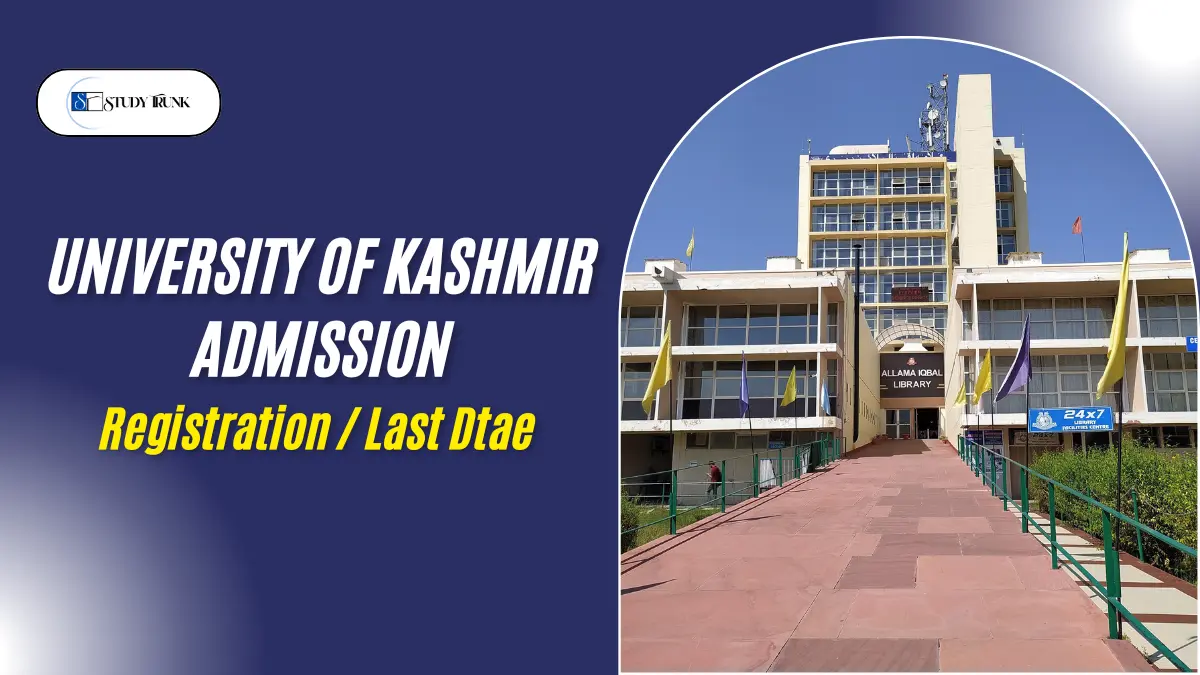
University of KashmiR Admission

University of Kashmir Admission 2025 Start Dates, Registration Portal, Eligibility and Entrance Exam

University of Kashmir Admissions for the 2025 academic session are now open, offering a wide array of programs across Diploma, Undergraduate (UG), Integrated, and Postgraduate (PG) levels. Aspiring students for Diploma courses can submit their online application forms starting August 18, 2025. For Postgraduate programs, the officially announced admission schedule indicates that the last date for online applications is July 29, 2025. Candidates interested in Undergraduate and Integrated programs must ensure their applications are completed and submitted by May 16, 2025. All applicants are strongly advised to visit the official University of Kashmir website and apply before the respective deadlines to guarantee successful submission and consideration for the 2025 academic year.

Quick Updates for Admission 2025

Overview University of Kashmir
University Name
University of Kashmir
Location
Srinagar, Jammu & Kashmir
Courses Offered
UG, PG, Integrated, Professional & Diploma
Popular Courses
B.Tech, MBA, M.Sc, M.A, M.Com, LLM, B.Pharm, MCA
Admission Mode Online & Offline
Official Website
Entrance Exams
KUET (University Test), CMAT (MBA), GATE (M.Tech), GPAT (M.Pharm), JEE Main (B.Tech), JKBOPEE (B.Pharm)
Eligibility Criteria
UG: 10+2 with 50% marks; PG: Graduation with 50% marks
Application Start Date
UG: April 2025, PG: June 2025
Average Fees
₹10,000 – ₹48,000 per year (varies by course)

Kashmir University Admission 2025

The admission process for Kashmir University in 2025 has commenced, and eligible students can apply online through the university’s official admission portal. The university provides a diverse range of Undergraduate (UG), Postgraduate (PG), Integrated, Professional, and Diploma programs across various disciplines, including Arts, Science, Commerce, Engineering, Management, Law, and more. Admission to these programs is primarily based on academic merit or through university-conducted entrance examinations, with some professional courses considering national-level entrance test scores.

For UG programs such as BA, BSc, BCom, BTech, and BBA, candidates must have successfully completed their 10+2 education from a recognized board, often with specific subject requirements and minimum percentage marks. Similarly, for PG courses like MBA, MSc, MTech, and MPharm, a relevant Bachelor’s degree with the required minimum percentage is essential. The University of Kashmir conducts its own University-Level Entrance Test (KUET) for the majority of its programs to ensure a fair and competitive selection process. Applicants are strongly advised to regularly visit the official University of Kashmir website (https://www.google.com/search?q=www.kashmiruniversity.net) for the most up-to-date admission schedules, detailed eligibility criteria for specific programs, and comprehensive application guidelines to ensure timely submission and participation in the selection process.

University of Kashmir UG Admission 2025

The University of Kashmir has initiated its Admission Process for 2025 across a wide spectrum of Undergraduate (UG) programs. Interested students can now submit their applications online via the official university portal. The university offers a diverse selection of programs in fields like Arts, Science, Commerce, Engineering, Management, and Law. Admissions are generally granted based on academic merit achieved in the 10+2 examination, although certain specialized programs might require candidates to appear for a University-Level Entrance Test (KUET).

For UG courses such as BA, BSc, BCom, BTech, and BBA, a pass in the 10+2 examination from a recognized board is the fundamental eligibility criterion, with specific minimum percentage requirements (typically 50%, with a relaxation of 5% for reserved categories). For programs like B.Tech and B.Pharm, scores in national or state-level entrance examinations are mandatory. Prospective students are encouraged to meticulously review the specific eligibility criteria, application schedules, and any additional requirements for their chosen program on the official university website to ensure a seamless admission process.

  • BA (Bachelor of Arts): A three-year undergraduate program focusing on humanities and social sciences, encompassing subjects like History, Political Science, Sociology, English, Urdu, and more. BA Admission 2025 is primarily based on merit in the 10+2 examination, with specific subject combinations available as per university regulations. Candidates must have passed 10+2 with a minimum of 50% marks (45% for reserved categories).
  • BSc (Bachelor of Science): This three-year degree program offers specializations in various science disciplines, including Physics, Chemistry, Mathematics, Botany, Zoology, and more. Admission is typically based on Class 12 scores, particularly in relevant science subjects. Honors programs in specific subjects are also available based on merit. Eligibility requires passing 10+2 with Science subjects and a minimum of 50% marks (45% for reserved categories).
  • BCom (Bachelor of Commerce): A three-year program designed for students aspiring to careers in finance, banking, and business. The curriculum covers areas such as Accounting, Economics, Taxation, and Business Management. Eligibility criteria include passing the 10+2 examination with Commerce or relevant subjects and a minimum of 50% marks (45% for reserved categories).
  • BTech (Bachelor of Technology): A four-year professional degree program in engineering disciplines like Civil Engineering, Mechanical Engineering, Electronics & Communication Engineering, and Computer Science Engineering. Admission to BTech programs usually requires a valid score in JEE Main. Candidates must have passed 10+2 with Physics, Chemistry, and Mathematics with a minimum of 50% marks (45% for reserved categories).
  • BBA (Bachelor of Business Administration): A three-year undergraduate degree aimed at students seeking careers in management, entrepreneurship, and corporate leadership. Admission is based on merit in the Class 12 examination, and the program covers fundamental business concepts in Marketing, Human Resources, Finance, and Operations. Eligibility requires passing 10+2 with a minimum of 50% marks (45% for reserved categories).

University of Kashmir PG Admission 2025

The University of Kashmir has announced the admission schedule for its various Postgraduate (PG) programs for the 2025 academic session. Candidates holding a Bachelor’s degree in the relevant discipline are eligible to apply online by the last date, July 29, 2025. Admission to most PG programs is based on the University-Level Entrance Test (KUET), while certain professional programs consider scores from national-level entrance examinations.

The university has also released a Selection Notification for the 2-Year LL.M. Programme (Session 2024) at the main campus. Candidates selected based on their entrance test scores must complete the admission process by January 7, 2025. Required documents include original marks cards, domicile certificates, character certificates, category certificates (if applicable), and a sworn affidavit. For comprehensive details regarding course-specific eligibility criteria, the selection process, and admission lists for all PG programs, please refer to the official University of Kashmir website at https://www.google.com/search?q=www.kashmiruniversity.net.

  • Kashmir University MTech Admission: The University of Kashmir offers M.Tech programs in disciplines such as Computer Science, Embedded Systems, Electronics & Communication, and Mechanical Engineering. Eligibility requires a B.E./B.Tech. degree in a relevant field with a minimum of 55% marks (50% for reserved categories). Admission is based on a valid GATE score followed by counseling, or a university-conducted entrance test if GATE scores are not available.
  • Kashmir University MSc Biotechnology Admission: Candidates seeking admission to the M.Sc. Biotechnology program must possess a Bachelor’s degree in Physical or Biological Sciences, Pharmacy, Agriculture, or Medical fields with a minimum of 55% marks (50% for reserved categories). Admission is based on the GAT-B (Graduate Aptitude Test – Biotechnology) score.
  • Kashmir University MBA Admission: The MBA and MBA (Financial Management) programs require candidates to hold a Bachelor’s degree in any discipline with at least 50% marks (45% for reserved categories). Admission is based on valid scores from CMAT, MAT, or CAT, followed by a Group Discussion (GD) and Personal Interview (PI) round.
  • Kashmir University MPharm Admission: For admission to the M.Pharm program, candidates must hold a B.Pharm degree from a recognized university with a minimum of 55% marks (50% for reserved categories). Admission is granted based on a valid GPAT (Graduate Pharmacy Aptitude Test) score, followed by counseling.

University of Kashmir Admission Process

Candidates can apply for admission to the University of Kashmir through both online and, in some cases, offline modes. However, the primary mode of application is online.

Steps to Apply Online:

  1. Visit the official website: https://www.google.com/search?q=www.kashmiruniversity.net
  2. Register: Create an account using a valid email ID and mobile number.
  3. Fill out the application form: Carefully complete all the required fields in the online application form.
  4. Upload documents: Upload scanned copies of all necessary documents, ensuring they meet the specified size and format requirements (e.g., mark sheets, certificates, photograph, signature).
  5. Pay the application fee: Pay the prescribed application fee through the available online payment options (e.g., credit card, debit card, net banking).
  6. Download the application form: After successful payment and submission, download a copy of the filled application form and payment receipt for your records.

How to Get Admission to the University of Kashmir?

  • Check Eligibility: Ensure you meet the specific eligibility criteria for the program you wish to apply for, including academic qualifications and any required entrance exam scores.
  • Apply Online: Fill out the online admission form on the official university website (https://www.google.com/search?q=www.kashmiruniversity.net) before the specified deadline.
  • Appear for Entrance Test (if applicable): For most programs, you will need to appear for the University-Level Entrance Test (KUET) or a relevant national-level entrance exam (e.g., JEE Main, CMAT, GATE, GPAT).
  • Check Merit List/Selection List: The university will publish merit lists or selection lists on its official website based on academic merit and/or entrance test scores.
  • Document Verification: If your name appears on the merit list, you will be called for document verification. You will need to produce original documents for verification.
  • Pay Fees: Once your documents are verified, you will need to pay the admission fees within the stipulated time to secure your seat.

University of Kashmir Entrance Exams for Admission

The University of Kashmir conducts its own University-Level Entrance Test (KUET) for the majority of its programs. However, for certain specialized programs, scores from the following national-level entrance examinations are considered:

Course
Entrance Exam(s)
MBA / MBA (Financial Management) CMAT, MAT, CAT
M.Sc Biotechnology GAT-B
M.Tech GATE
M.Pharm GPAT
B.Tech
JEE (Main) (Best of Two Scores Considered)
IMBA (BBA-MBA) UGAT
B.Pharm JKBOPEE

University of Kashmir Eligibility Criteria

The eligibility criteria for admission to the University of Kashmir vary depending on the specific program. Here are the general requirements:

UG Programs:

  • General Eligibility: 10+2 pass from a recognized board with a minimum of 50% marks in aggregate (45% for reserved categories). Specific programs may have additional subject requirements.
  • B.Tech: 10+2 pass with Physics, Chemistry, and Mathematics with a minimum of 50% marks (45% for reserved categories) AND a valid JEE (Main) score.   
  • B.Pharm: 10+2 pass with Physics, Chemistry, and Biology/Mathematics with a minimum of 50% marks (45% for reserved categories) AND admission through JKBOPEE.

PG Programs:

  • General Eligibility: Bachelor’s degree in a relevant discipline from a recognized university with a minimum of 50% marks in aggregate (45% for reserved categories). Specific programs may have higher percentage requirements or specific degree requirements.
  • M.Tech: Bachelor’s degree (B.E./B.Tech.) in a relevant engineering discipline with a minimum of 55% marks (50% for reserved categories) AND a valid GATE score.
  • MBA: Bachelor’s degree in any discipline with a minimum of 50% marks (45% for reserved categories) AND a valid score in CMAT, MAT, or CAT.

Integrated Courses:

  • 10+2 pass from a recognized board with a minimum of 50% marks in aggregate. Specific programs may have additional subject requirements.

For Foreign Students:

  • The university admits international students based on their academic merit and performance in relevant entrance examinations, as per the university’s international student admission policy.

University of Kashmir  Fee Structure & Scholarships

The fee structure at the University of Kashmir varies depending on the course and program level. Here is an indicative range of annual fees for some popular programs:

  • B.Tech: ₹40,000 – ₹48,000 per year
  • M.Tech: ₹12,000 per year
  • MBA: ₹30,000 – ₹40,000 per year
  • B.Pharm: ₹25,000 per year
  • PG Courses (General): ₹10,000 – ₹25,000 per year

University of Kashmir Scholarships & Financial Aid

The University of Kashmir offers various scholarships and financial aid opportunities to deserving and needy students, including:

  • Merit-based scholarships: Awarded to students who demonstrate excellent academic performance.
  • National scholarships: Students can apply for various national-level scholarships offered by the Government of India.
  • Financial aid for economically weaker sections: The university provides financial assistance to students from economically disadvantaged backgrounds. Students whose family income is less than ₹1,20,000 per year may be eligible for specific scholarships.

Prospective students are advised to visit the official university website’s scholarship section for detailed information on available scholarships, eligibility criteria, and the application process.

Important Documents for University of Kashmir Admission

Candidates must keep the following documents readily available in the required format (scanned copies for online application) before starting the application process:

  • Mark sheets of all qualifying examinations (10th, 12th, Bachelor’s degree, etc.)
  • Domicile certificate (proof of residence)
  • Date of birth certificate (usually Class 10 marks sheet or birth certificate)
  • Character certificate from the last attended institution
  • Provisional certificate of the qualifying degree (if the original degree certificate is not yet issued)
  • Reserved category certificate (if applicable), issued by the competent authority
  • Passport-size photograph (as per specified dimensions)
  • Signature (scanned)
  • Any other documents as specified in the admission brochure for the specific program.

Kashmir University Admission 2025 – FAQs

Ques: What is the last date for Kashmir University entrance 2025?

Ans: The last date for admission to Kashmir University for the 2025-26 academic session is June 28, 2025. Candidates must complete their online application process before this deadline. For updates on entrance exams, eligibility, and admission procedures, visit the official website of Kashmir University.

Ques: What is the duration of a Ph.D. at Kashmir University?

Ans: The Ph.D. program at the University of Kashmir, North Campus, is 3 years long. However, the duration may vary based on research requirements and extensions granted by the university. Candidates should check the eligibility criteria for their specific discipline before applying.

Ques: Who is eligible for PG admission at Kashmir University?

Ans: Candidates who have completed their undergraduate degree under the Choice Based Credit System (CBCS) can apply for PG programs at Kashmir University. They must have earned at least 24 core credits as Core or Generic Elective Courses in their relevant subject during UG studies.

Ques: Does Kashmir University accept CUET scores?

Ans: No, the University of Kashmir does not accept CUET scores for admission. However, the Central University of Kashmir (CU Kashmir) does consider CUET scores for undergraduate (UG) admissions. Applicants should check the respective university’s admission criteria before applying.

Symbiosis Online MBA Fees

Symbiosis Online MBA Fees and Program Details 2025

The Symbiosis Online MBA, offered by the Symbiosis School for Online and Digital Learning (SSODL), part of Symbiosis International (Deemed University), is a highly sought-after program for working professionals and students seeking a flexible, UGC-approved Master of Business Administration degree. Known for its industry-relevant curriculum, expert faculty, and robust placement support, the program is designed to equip learners with advanced business management skills. This blog provides a comprehensive overview of the Symbiosis Online MBA fees for 2025, including a detailed breakdown of costs, payment options, scholarships, and additional expenses, along with insights into the program’s structure, eligibility, admission process, and career prospects.

Symbiosis Online MBA Program

The Symbiosis Online MBA is a two-year, fully online degree program divided into four semesters, recognized by the University Grants Commission (UGC) and the All India Council for Technical Education (AICTE). It offers the same academic rigor and industry relevance as Symbiosis’s on-campus MBA programs, making it ideal for professionals balancing work and education. The program includes nine specializations, such as Marketing, Finance, Human Resource Management, Business Analytics, and Healthcare Management, allowing students to tailor their learning to career goals. With a total intake of 3,000 students per admission session, the program is delivered through the iCloudEMS learning management system, featuring live and recorded sessions, e-learning materials, and real-life case studies.

Symbiosis Online MBA Apply Dates

  • July 2025 Cycle: Last date for admission is September 30, 2025.
  • January 2026 Cycle: Last date for admission is April 30, 2026.

Symbiosis Online MBA Fee Structure for 2025

The total fee for the Symbiosis Online MBA program in 2025 varies based on the student’s category (Indian, international, or from conflict-affected regions). Below is a detailed breakdown of the fees, sourced from reliable educational portals and Symbiosis’s official communications.

Program Structure and Specializations

The Symbiosis Online MBA spans four semesters, with the first two semesters covering core subjects like Finance, Marketing, and Operations, common for all students. In the third and fourth semesters, students choose one of nine specializations and four elective subjects, along with a project per semester. The curriculum includes 100 credits, with assessments comprising 30% internal (assignments, quizzes) and 70% external (university exams). Students need a minimum CGPA of 4.00 out of 10 to graduate. The program emphasizes experiential learning through case studies, simulations, and industry projects, ensuring practical skills. The specializations are:

  1. Marketing
  2. Finance
  3. Human Resource Management
  4. Operations
  5. Business Analytics
  6. Healthcare Management
  7. International Business
  8. Logistics and Supply Chain Management
  9. Agri Operations Management
Specialization Indian Students (₹) International Students (USD) Duration
Marketing 3,15,000 4,065 2 years
Finance 3,15,000 4,065 2 years
Human Resource Management 3,15,000 4,065 2 years
Operations 3,15,000 4,065 2 years
Business Analytics 3,15,000 4,065 2 years
Hospital and Healthcare Management 3,15,000 4,065 2 years
International Business 3,15,000 4,065 2 years
Logistics and Supply Chain Management 3,15,000 4,065 2 years
Agri Operations Management 3,15,000 4,065 2 years

Scholarships and Financial Aid

  • Scholarship for Work Experience: A ₹50,000 scholarship is available for students with a minimum of two years of work experience, reducing the total fee for Indian students to ₹2,65,000.
  • Merit-Based Scholarships: Up to 50% tuition fee waiver for students with exceptional academic records or entrance exam scores (e.g., CAT/MAT), subject to availability.
  • Category-Based Concessions: Reserved category students (SC/ST) may receive additional concessions, typically 5–10% of the tuition fee, upon submitting valid certificates.
  • Loan Assistance: Symbiosis partners with financial institutions like HDFC Credila, Avanse, and Propelld for education loans with interest rates of 8–12% per annum. Loan approval depends on the applicant’s credit profile.
  • Employer Sponsorship: Some companies sponsor employees’ MBA fees. Check with your employer for reimbursement policies.

Eligibility Criteria

To enroll in the Symbiosis Online MBA, candidates must meet the following requirements:

  • Educational Qualification: Bachelor’s degree in any discipline from a recognized university with at least 50% aggregate marks (45% for SC/ST candidates).
  • International Students: Degree from a recognized institution, with an equivalence letter from the Association of Indian Universities if required.
  • Final-Year Students: Candidates awaiting final-year results can apply, provided they complete their degree before admission deadlines.
  • Entrance Exam: No entrance exam is required; selection is merit-based, though candidates with low marks may need to clear an SSODL screening test.

Admission Process for 2025

Symbiosis offers two admission cycles for its online MBA: July 2025 and January 2026. The process is straightforward and entirely online:

  1. Visit the Official Website: Go to https://ssodl.edu.in/ and register using a valid email and phone number.
  2. Complete Application Form: Fill in personal, academic, and professional details.
  3. Upload Documents: Submit scanned copies of:
    • Academic records (10th, 12th, and undergraduate degree certificates/mark sheets)
    • Government ID proof (e.g., Aadhaar, passport)
    • Recent passport-size photo
    • Work experience certificate (if applying for scholarship)
    • SC/ST certificate (if applicable)
  4. Pay Application Fee: ₹1,500 via online payment gateway (credit/debit card, net banking) or demand draft.
  5. Screening (if required): Candidates with borderline marks may take an online screening test.
  6. Document Verification: SSODL verifies documents and sends admission confirmation via email/phone.
  7. Pay Program Fee: Pay the first installment or full fee to secure your seat.
  8. Access LMS: Receive login credentials for the iCloudEMS platform to start learning.

Comparison with Symbiosis Distance MBA (SCDL)

Note that Symbiosis Centre for Distance Learning (SCDL) offers a Post Graduate Diploma in Business Administration (PGDBA), often considered equivalent to an MBA, with a lower fee of ₹58,000 for general category students. However, the SSODL Online MBA is a full-fledged MBA degree with a more advanced curriculum and better placement support, justifying its higher cost. The SCDL PGDBA requires an entrance test (SCDL-PGDBA Entrance Test), while the SSODL MBA does not, making the latter more accessible.

Tips for Budgeting and Financial Planning

  1. Apply for Scholarships: Submit work experience certificates or merit proofs early to secure the ₹50,000 scholarship or other concessions.
  2. Opt for Installments: Semester-wise or EMI payments reduce immediate financial strain.
  3. Explore Loans: Compare interest rates from multiple lenders to minimize repayment costs.
  4. Budget for Extras: Allocate ₹50,000–₹70,000 for exams, tech, and optional expenses over two years.
  5. Check Employer Support: Some companies reimburse MBA fees as part of professional development programs.
Online MBA Fees

Online MBA Fee Structure 2025-26: Find Your Affodable MBA Degree

An Online MBA is a great way to learn business skills without leaving your job. It’s popular in India because it’s flexible and cheaper than regular MBAs. In 2025, the cost of online MBA programs depends on the college, course time, and subjects. This guide uses simple words to explain online MBA fees in India to help you choose.

Factors Influencing Online MBA Fees in India

The cost of an online MBA in India for 2025 depends on several factors:

  • Institution Type: Government universities like IGNOU offer lower fees compared to private institutions like NMIMS or Amity.
  • Program Reputation: Prestigious institutions with global accreditations charge higher fees due to their brand value and placement support.
  • Specializations: Niche specializations like FinTech or AI may have higher fees due to specialized faculty and resources.
  • Additional Services: Features like placement assistance, live classes, and access to e-libraries can increase costs.
  • Payment Flexibility: Some universities offer discounts for lump-sum payments or semester-wise installments.

How to Choose the Right Online MBA?

To pick the best program:

  1. Check Approval: Make sure the degree is UGC-approved.
  2. Cost vs. Jobs: Check fees and job placements (e.g., LPU’s high salaries).
  3. Subjects: Choose what fits your career (e.g., Data Science for tech jobs).
  4. Learning Style: Look for live classes, videos, and easy platforms.
  5. Job Help: Colleges like Manipal and NMIMS help you get jobs.

How to Join an Online MBA in 2025?

Joining is easy:

  1. Eligibility: You need a bachelor’s degree with 40–50% marks.
  2. Application: Fill an online form and send documents with the fee.
  3. Exams: Some colleges (e.g., Symbiosis) ask for CAT/MAT scores; others don’t.
  4. Deadlines: Apply by May 31, 2025, for July 2025 classes.
  5. Verification: Send documents and pay fees to confirm.

Online MBA Fee for Top Colleges in India (2025)

Below is a list of fees and admission steps for online MBA programs at top UGC-approved colleges in India for 2025. Fees and deadlines may change, so check the college’s official website for the latest details.

Indira Gandhi National Open University (IGNOU)

The online MBA at IGNOU costs ₹62,000 (₹15,500 per semester) for a 2-year program, with subjects like Marketing, Finance, HR, and Operations. It’s the cheapest, trusted option, ideal for flexible learning. To join, you need a bachelor’s degree with 50% marks (45% for SC/ST) and must pass the OPENMAT exam. Apply by May 31, 2025, on IGNOU’s website, pay a ₹200–₹500 application fee, and upload documents like degree certificates, mark sheets, ID proof (e.g., Aadhaar), and a photo. After document verification, pay fees to confirm admission and get LMS access. You can pay per semester via card or net banking, with extra exam fees of ₹200 per course.

Amity University Online

Amity University offers a 2-year online MBA for ₹1,95,000–₹2,99,000, depending on subjects like Marketing, Finance, HR, or Strategic Management. It’s globally recognized (ACCA accredited) with a strong alumni network and job-focused courses. You need a bachelor’s degree with 40% marks; no entrance exam is required unless your marks are below 40%, then you take Amity’s test. Apply by May 30, 2025, on Amity’s website, pay a ₹1,000–₹3,000 application fee, and upload degree certificates, mark sheets, ID proof, and a photo. After verification, pay fees to confirm and get LMS access. Save 10% by paying the full amount, or use yearly payments or EMI.

Narsee Monjee Institute of Management Studies (NMIMS) Global Access

NMIMS offers a 2-year online MBA for ₹1,44,000–₹1,68,000 or a 1-year Executive MBA for ₹1,20,000, with subjects like Finance, Marketing, HR, IT, and Operations. It’s well-known for its user-friendly online platform and great job placement support. You need a bachelor’s degree with 50% marks (45% for SC/ST); the Executive MBA requires 2–3 years of work experience. No entrance exam is needed; admission is merit-based. Apply by May 31, 2025, on NMIMS’s website, pay a ₹1,200–₹1,500 application fee, and upload degree certificates, mark sheets, ID proof, work experience (if needed), and a photo. After verification, pay fees to confirm and get LMS access. Save 15% by paying the full amount or pay per semester.

Lovely Professional University (LPU) Online

LPU’s 2-year online MBA costs ₹1,60,000 (₹40,000 per semester) and covers subjects like Finance, Marketing, Data Science, and HR. It’s top-ranked (NIRF) with virtual classes and strong job placements (highest CTC: ₹28.25 LPA). You need a bachelor’s degree with 50% marks (45% for SC/ST); no entrance exam is required, as admission is merit-based. Apply by May 30, 2025, on LPU’s website, pay a ₹1,000 application fee, and upload degree certificates, mark sheets, ID proof, and a photo. After verification, pay fees to confirm and get LMS access. Save 10% by paying the full amount, or use EMI or semester-wise payments.

Chandigarh University Online

Chandigarh University offers a 2-year online MBA with dual specialization for ₹1,50,000 (₹37,500 per semester), covering subjects like Finance, HR, Marketing, AI, and Operations. It’s NAAC A+ accredited, affordable, and offers good job support (NIRF rank 27). You need a bachelor’s degree with 50% marks (45% for SC/ST); no entrance exam is needed, as admission is merit-based. Apply by May 30, 2025, on Chandigarh University’s website, pay a ₹1,000 application fee, and upload degree certificates, mark sheets, ID proof, and a photo. After verification, pay fees to confirm and get LMS access. Pay per semester or yearly; grants are available for eligible students.

Uttaranchal University Online

Uttaranchal University’s 2-year online MBA costs ₹1,50,000–₹1,79,000, with subjects like Finance, HR, Marketing, FinTech, and Healthcare. It offers live classes, personal mentors, and online library access. You need a bachelor’s degree with 50% marks (45% for SC/ST); no entrance exam is required, as admission is merit-based. Apply by May 31, 2025, on Uttaranchal University’s website, pay a ₹1,000 application fee, and upload degree certificates, mark sheets, ID proof, and a photo. After verification, pay fees to confirm and get LMS access. Pay per semester or save with full payment.

Symbiosis School for Online and Digital Learning (SSODL)

Symbiosis offers a 2-year online MBA for ₹1,50,000–₹2,00,000, with subjects like Marketing, Finance, HR, and Operations. It’s known for good job placements (average CTC: ₹7.39 LPA), practical learning, and mentors. You need a bachelor’s degree with 50% marks (45% for SC/ST) and a valid SNAP (Symbiosis National Aptitude Test) score. Register for SNAP by November 2024, apply on SSODL’s website by May 2025, pay a ₹1,500 application fee, and upload degree certificates, mark sheets, SNAP scorecard, ID proof, and a photo. Clear SNAP and Group Exercise, Personal Interview, and Written Ability Test (GE-PI-WAT). After selection, pay fees to confirm and get LMS access. Pay per semester or use EMI.

DY Patil University Online

DY Patil’s 2-year online MBA costs ₹1,70,000–₹1,99,000, with subjects like Finance, Healthcare, HR, AI, and Marketing. It offers modern courses, live and recorded classes, and job support. You need a bachelor’s degree with 50% marks (45% for SC/ST); no entrance exam is needed, as admission is merit-based. Apply by May 31, 2025, on DY Patil’s website, pay a ₹1,000 application fee, and upload degree certificates, mark sheets, ID proof, and a photo. After verification, pay fees to confirm and get LMS access. Pay per semester, yearly, or use EMI.

Manipal University Online

Manipal’s 2-year online MBA costs ₹1,75,000 (₹43,750 per semester), with subjects like Finance, Marketing, HR, and Business Analytics. It has strong industry ties, flexible learning, and job support (average CTC: ₹17.34 LPA). You need a bachelor’s degree with 50% marks (45% for SC/ST); no entrance exam is required, as admission is merit-based. Apply by May 31, 2025, on Manipal’s website, pay a ₹1,500 application fee, and upload degree certificates, mark sheets, ID proof, and a photo. After verification, pay fees to confirm and get LMS access. Pay per semester or save with full payment.

Jain University Online

Jain University’s 2-year online MBA costs ₹1,20,000–₹1,50,000, with subjects like Finance, Marketing, HR, FinTech, and Healthcare. It’s affordable, offers blended learning, and has good job placement support. You need a bachelor’s degree with 50% marks (45% for SC/ST) and a valid Jain Entrance Test (JET) or CAT/MAT/CMAT/XAT/NMAT/GMAT score. Register for JET or submit an entrance score, apply by May 2025 on Jain’s website, pay a ₹1,000 application fee, and upload degree certificates, mark sheets, entrance scorecard, ID proof, and a photo. Clear JET (Written Test, Extempore, Personal Interview) or qualify based on your entrance score. After selection, pay fees to confirm and get LMS access. Pay per semester or save with full payment.

Top 50 Universities and Colleges

Below is a list of the top 50 universities and colleges in India offering online MBA programs for 2025, ranked by their total tuition fees (from lowest to highest) based on available data. The list focuses on UGC-approved institutions, including government and private universities, known for quality education and placement support. Fees and admission details may vary, so check official websites for the latest information. Note that not all top 50 MBA colleges offer online MBAs, and some data is limited for less prominent institutions. This list prioritizes those with clear online MBA fee structures, supplemented by general MBA fees where online-specific data is unavailable.

Rank University/College Location Total Fee (₹) Duration
1 Indira Gandhi National Open University (IGNOU) Delhi 62,000 2 years
2 Pondicherry University Puducherry 75,000 2 years
3 Venkateshwara Open University Arunachal Pradesh 76,000 2 years
4 Bharathidasan University Tiruchirappalli 80,000–1,00,000 2 years
5 University of Madras Chennai 80,000–1,00,000 2 years
6 Shoolini University Solan 90,000 2 years
7 Alagappa University Karaikudi 1,00,000 2 years
8 Madurai Kamaraj University Madurai 1,00,000–1,20,000 2 years
9 Anna University Chennai 1,00,000–1,30,000 2 years
10 MIT Pune (Distance) Pune 1,00,000–1,50,000 2 years
11 Jain University Online Bangalore 1,20,000–1,50,000 2 years
12 Annamalai University Chidambaram 1,20,000–1,50,000 2 years
13 Tamil Nadu Open University Chennai 1,20,000–1,50,000 2 years
14 Karnataka State Open University Mysore 1,20,000–1,60,000 2 years
15 Dr. MGR Educational and Research Institute Chennai 1,20,000–1,50,000 2 years
16 Guru Nanak Dev University Amritsar 1,00,000–1,50,000 2 years
17 Osmania University Hyderabad 1,00,000–1,50,000 2 years
18 Andhra University Visakhapatnam 1,00,000–1,50,000 2 years
19 University of Calicut Kozhikode 1,00,000–1,50,000 2 years
20 Periyar University Salem 1,00,000–1,50,000 2 years
21 Acharya Nagarjuna University Guntur 1,00,000–1,50,000 2 years
22 Mangalore University Mangalore 1,00,000–1,50,000 2 years
23 Kurukshetra University Kurukshetra 1,20,000–1,60,000 2 years
24 Himachal Pradesh University Shimla 1,20,000–1,60,000 2 years
25 Chandigarh University Online Chandigarh 1,50,000 2 years
26 Hindustan Online CODE Chennai 1,50,000 2 years
27 Sikkim Manipal University Online Gangtok 1,50,000–1,75,000 2 years
28 Parul University Online Vadodara 1,50,000–2,00,000 2 years
29 Symbiosis School for Online and Digital Learning (SSODL) Pune 1,50,000–2,00,000 2 years
30 Welingkar Institute (WeSchool) Mumbai 1,50,000–2,00,000 2 years
31 Uttaranchal University Online Dehradun 1,50,000–1,79,000 2 years
32 Vellore Institute of Technology (VIT) Online Vellore 1,50,000–2,00,000 2 years
33 Bharati Vidyapeeth Online Pune 1,50,000–2,00,000 2 years
34 Kalinga University Raipur 1,50,000–2,00,000 2 years
35 GLA University Online Mathura 1,50,000–2,00,000 2 years
36 Amrita Vishwa Vidyapeetham Online Coimbatore 1,50,000–2,00,000 2 years
37 Lovely Professional University (LPU) Online Phagwara 1,60,000 2 years
38 DY Patil University Online Pune 1,70,000–1,99,000 2 years
39 Manipal University Online Jaipur 1,75,000 2 years
40 University of Petroleum and Energy Studies (UPES) Online Dehradun 1,75,000–2,20,000 2 years
41 SRM University Online Chennai 1,80,000–2,50,000 2 years
42 Amity University Online Noida 1,95,000–2,99,000 2 years
43 Narsee Monjee Institute of Management Studies (NMIMS) Global Access Mumbai 2,10,000 2 years
44 Institute of Management Technology (IMT) Ghaziabad 2,00,000–3,00,000 2 years
45 Shiv Nadar University Greater Noida 2,00,000–3,00,000 2 years
46 Birla Institute of Management Technology Greater Noida 2,00,000–3,00,000 2 years
47 ICFAI Online Hyderabad 2,00,000–3,00,000 2 years
48 Jaipuria Institute of Management Noida 2,00,000–3,00,000 2 years
49 MAHE Manipal Online Manipal 2,80,000 2 years
50 Great Lakes Institute of Management Gurgaon 2,50,000–3,50,000 2 years

Affordable Online MBA Options

For students on a budget, IGNOU (₹62,000) is the cheapest, government-run, and UGC-approved. Jain University Online (₹1,20,000–₹1,50,000) offers good value as a private option. Chandigarh University Online (₹1,50,000) provides dual specialization and NAAC A+ accreditation. These colleges offer trusted degrees and job support at low costs.

Tips to Choose the Right Program

To pick the best online MBA, ensure the degree is UGC-approved, compare fees with job placements (e.g., LPU’s high CTC of ₹28.25 LPA), choose subjects that match your career goals (e.g., Data Science for tech jobs), look for live classes, recorded videos, and easy platforms, and prioritize colleges with strong job support like Manipal, NMIMS, or LPU.