Delhi University CSAS UG Admission

Delhi University CSAS UG Admission Update (2025): Reorder Your Preferences Now!

Here’s crucial news for anyone applying to Delhi University for undergraduate admission via the Common Seat Allocation System (CSAS)! All candidates can reorder their college and course options on the official CSAS UG portal starting at 5:00 PM on July 24, 2025. Do not pass up the opportunity to change your selections before the second round of seat distribution; this window will stay open until July 25, 2025, at 4:59 PM.

How the CSAS UG Admission Process Works

Delhi University uses the Common Seat Allocation System (CSAS) to make admissions smooth, transparent, and student-friendly. Everything happens online—no need to visit multiple colleges!

Step 1: Appear for CUET-UG 2025

  • Every student who wants UG admission in Delhi University must appear for the Common University Entrance Test (CUET-UG).
  • Your CUET score will decide your eligibility and ranking in DU’s admission list.

Step 2: Register on the CSAS UG Portal

  • Go to the official CSAS UG portal and create your account.
  • Fill in your personal details, upload required documents, and enter CUET scores.

Step 3: Fill and Rank Your Preferences

  • Select your preferred courses and colleges.
  • You can list multiple choices and arrange them in any order (e.g., BA English in Hindu College, B.Com in SRCC, etc.).
  • Order matters – higher preferences are considered first during seat allotment.
Important Posts
LLB Distance Education Online BCA
Online MCA Course Online Bcom
Online MA Admission Online MBA in Business Analytics
Online MCom Distance MBA in Business Analytics

Step 4: Wait for Seat Allotment Rounds

  • Delhi University will conduct multiple allotment rounds.
  • Seats will be offered based on:
    • Your CUET score
    • Category/reservation
    • Your ranked preferences
    • Availability of seats

Step 5: Accept Seat or Choose Upgrade

  • If you’re allotted a seat, you can either:
    • Accept it
    • Choose “Upgrade” to try for a better option in the next round

 Step 6: Check Vacancy and Reorder Preferences

  • After the first allotment, vacant seat details are published.
  • You can reorder your preferences during the official window to improve your chances in the next round.

Step 7: Lock Your Seat and Verify

  • Once you get a seat you’re happy with:
    • Lock it on the portal
    • Pay the admission fee online
    • Visit the allotted college for physical document verification

Frequently Asked Questions (FAQs)

  1. What is the CSAS UG portal?
    It is Delhi University’s official online platform for UG admissions, used to fill, rank, and allot seats based on CUET-UG scores.
  2. Is the CUET exam compulsory for DU admission?
    Yes, CUET-UG 2025 is mandatory for admission to any UG course at Delhi University.
  3. Can I change my college and course preferences after registration?
    Yes, during the preference reordering window (July 24–25), you can modify your choices.
  4. What if I miss the reordering window?
    If you miss it, you won’t be able to change your preferences for Round 2. You’ll only be considered based on your existing list.
  5. How can I see the vacant seats?
    The CSAS portal will display vacant seats starting July 24, 2025, at 5:00 PM.
  6. What does the “Upgrade” option mean?
    It allows you to be considered for a better seat (higher on your preference list) in the next round if available.
  7. How do I confirm my allotted seat?
    Accept the seat on the CSAS portal, pay the fees online, and complete physical verification at the allotted college.
  8. What if I don’t accept the seat before July 30, 4:59 PM?
    You’ll lose your allotted seat and may not be considered in the next rounds.
  9. How many times can I reorder preferences?
    Only once, during the official window (July 24–25, 2025).
  10. Can I apply for both college and course upgrade?
    Yes, as long as it’s part of your reordered preference list and seats are available.
Online Education Advantages and Disadvantages

Online Education Advantages and Disadvantages

Online education has become very popular in recent years. With the rise of the internet and technology, students can now learn from anywhere in the world without going to a physical classroom. Online education offers flexibility and convenience, but it also comes with some challenges. In this blog, we will explore the advantages and disadvantages of online education in simple words to help you understand if it’s the right choice for you.

What is Online Education?

Online education refers to learning through the internet. Students can take courses, attend classes, and complete assignments using computers or smartphones. Many schools, colleges, and platforms like Coursera, Udemy, and Khan Academy offer online courses. It’s a modern way of learning that is growing fast, especially after the COVID-19 pandemic, when 98% of universities worldwide shifted to online classes (UNESCO, 2020).

Online Education vs Offline Education Comparison Table

Factor Online Education Offline Education
Flexibility Highly flexible; learn at your own pace and schedule from anywhere with internet. Fixed schedules; requires attending classes at specific times and locations.
Cost More affordable; lower tuition, no commuting or housing costs. More expensive; includes tuition, travel, accommodation, and campus facility costs.
Interaction Limited face-to-face interaction; relies on virtual forums, chats, or video calls. Direct interaction with teachers and peers; supports networking and collaboration.
Learning Environment Requires self-discipline; distractions at home and tech issues can disrupt learning. Structured classroom setting; fewer distractions with access to libraries and labs.
Practical Learning Limited for hands-on subjects; relies on simulations, less effective for practical skills. Ideal for hands-on fields like medicine or engineering with access to labs and equipment.
Credibility Some courses lack recognition; employer skepticism about online degrees. Widely recognized degrees; trusted by employers and institutions.
Access to Resources Wide range of courses from global platforms; free resources like Khan Academy. Limited to institution’s offerings; access to physical resources like libraries.
Technical Requirements Needs reliable internet and devices; technical issues can disrupt learning. Minimal tech needs; relies on physical infrastructure like classrooms and labs.

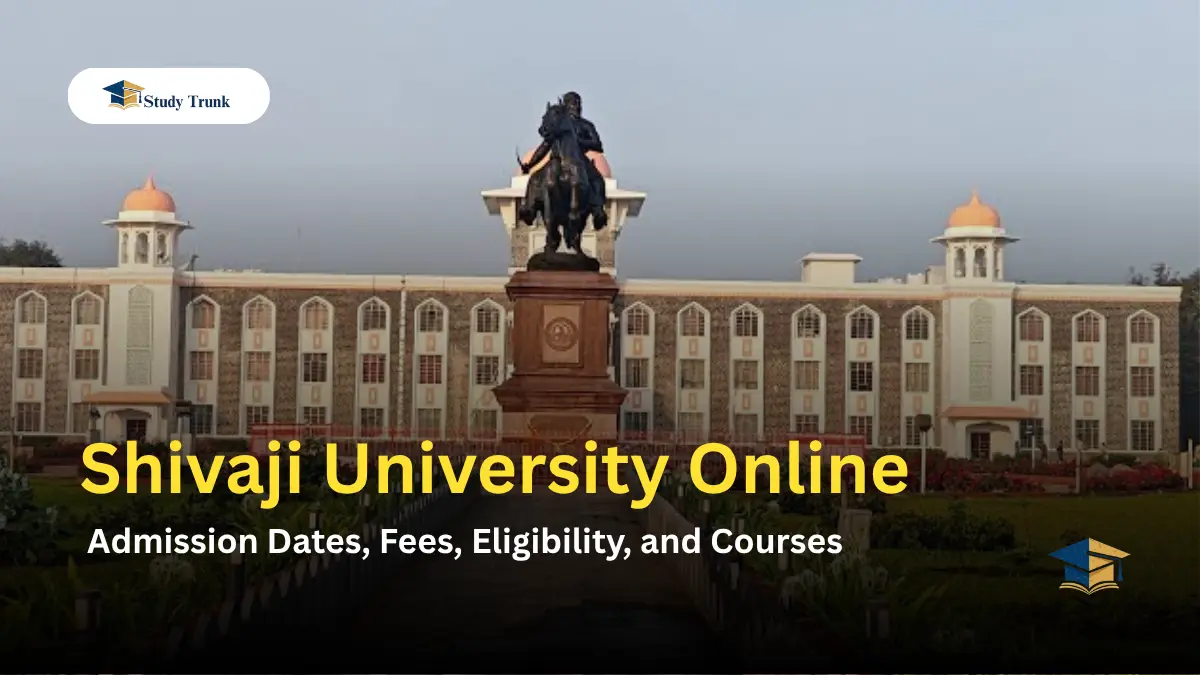
Shivaji University Online

Shivaji University Online 2025: Admission Dates, Fees, Eligibility, and Courses

Shivaji University, established in 1962 in Kolhapur, Maharashtra, is a prestigious public institution named after Chhatrapati Shivaji Maharaj, the renowned Maratha warrior. Recognized by the University Grants Commission (UGC) and accredited with an ‘A+’ grade by NAAC, it ranks among India’s top universities (101-150 in NIRF 2025). The university’s Centre for Distance and Online Education (CDOE), established in 2005, offers flexible learning opportunities for students, particularly working professionals and those seeking accessible higher education. With affiliations to 276 colleges across Kolhapur, Sangli, and Satara, Shivaji University is renowned for its academic excellence, industry connections, and robust digital infrastructure for online and distance education.

Shivaji University Online

Shivaji University’s online and distance education programs, facilitated through the CDOE, provide a range of undergraduate (UG), postgraduate (PG), and diploma courses designed for flexibility and accessibility. These programs are approved by the UGC-DEB and, for technical courses, by AICTE, ensuring quality and recognition. The online platform offers a world-class learning experience with digital libraries, virtual counseling, and career support, catering to diverse learners nationwide.

Shivaji University Online Admission 2025

The admission process for Shivaji University’s online and distance education programs for the 2025-26 academic year is open, with applications accepted through the official portal (www.unishivaji.ac.in/distedu). The process is entirely online, and the tentative last date for applications is July 31, 2025, for the July session. Create an account on the university’s admission portal with a valid email and mobile number. Complete the online application with personal and academic details. Submit scanned copies of required documents (e.g., mark sheets, certificates) in the specified format.Pay the application fee (INR 300 for UG, INR 600-930 for PG, or INR 500-1500 depending on the program) via the online payment gateway. Review and submit the application, then track its status through the student portal.admission.icdde.comdde.educationdunia.comonline.icdde.com

Note: Admissions are primarily merit-based for most courses, with entrance exams required for select programs like MBA and MCA.

Shivaji University Online Quick Update

  • Admission Open: Online registration for the July 2025 session began on May 21, 2025, with a tentative deadline of July 31, 2025.distance.collegeportal.in
  • GATE CCMT Counselling 2025: Special Round 2 seat allotment results for MTech/MArch/MPlan courses are scheduled for July 26, 2025.shiksha.com
  • MAH MCA CET 2025: The final merit list for MCA admissions has been published, with CAP Round 1 option form submission open from July 27 to July 29, 2025, and provisional seat allotment results on August 1, 2025.shiksha.com
  • MBA Project Submission: MBA (Distance Mode) Part-II project reports are due by January 30, 2025.distance.educationiconnect.com

How to Get Shivaji University Online Admission?

To secure admission to Shivaji University’s online or distance education programs for 2025:

  1. Visit the official website (www.unishivaji.ac.in/distedu).
  2. Register on the admission portal and fill out the application form with accurate details.
  3. Upload required documents, such as academic certificates and ID proof.
  4. Pay the application fee online (INR 300 for UG, INR 600-930 for PG, or INR 500-1500 based on the program).
  5. Submit the form and monitor the application status.
  6. For courses like MBA or MCA, prepare for and appear in the required entrance exams (e.g., MBA-CET, MAH-MCA-CET, or MH CET for exemptions).
  7. Check the merit list or entrance exam results on the official website and attend counseling if required.
  8. Complete document verification and pay the admission fee to finalize enrollment.

Shivaji University Online Eligibility Criteria

Eligibility criteria vary by program:

  • UG Courses (e.g., BA, BCom, BCA): Completion of 10+2 (HSC) with 45-55% marks from a recognized board. BTech requires Physics, Chemistry, and Mathematics (PCM) with a minimum of 60%.application.educationiconnect.comadmission.icdde.com
  • PG Courses (e.g., MA, MCom, MSc, MBA, MCA): A bachelor’s degree in a relevant discipline with 45-50% marks (45% for reserved categories). MBA and MCA require entrance exam scores (e.g., MAH-CET, MBA-CET, or GATE for MTech).application.educationiconnect.comadmission.icdde.comshiksha.com
  • Diploma Courses (e.g., Bioinformatics, Mass Communication): 10+2 or a bachelor’s degree, depending on the program, with 45-50% marks.application.educationiconnect.com
  • Distance Education: BA/BCom requires 10+2; PG courses like MA/MCom/MSc require a relevant bachelor’s degree. MBA (Distance) requires 45-50% in a bachelor’s degree and an entrance exam.dde.educationdunia.comdistance.collegeportal.in
  • Reserved Categories: Maharashtra state reservation policies apply, offering relaxed criteria (e.g., 45% for SC/ST/OBC/EWS).distance.educationiconnect.comadmission.icdde.com

Candidates must verify specific eligibility on the official website, as requirements may vary by specialization.

Shivaji University Online Fees

Shivaji University, a renowned institution in Kolhapur, Maharashtra, offers a range of online and distance education programs designed to make higher learning accessible to a broader audience. The fee structure for these online courses is generally considered affordable and varies depending on the chosen program and level of study, encompassing both undergraduate and postgraduate degrees. Prospective students are advised to consult the official university website for the most current and precise fee breakdowns, as amounts can differ based on specific course components and any applicable concessions or scholarships.

Undergraduate Programs (UG)

Course Duration Approx. Total Fee (₹) Notes
BA 3 years 11,495–11,725 First-year fee ≈ ₹3,825
B.Com 3 years 11,495–11,725 Same as above

Postgraduate Programs (PG)


Course Duration Total Fee (₹) First-year Fee (approx)
MA (All branches) 2 years ~10,100 First year ≈ ₹5,050
M.Com 2 years ~10,100 First year ≈ ₹5,050
MSc (Maths) 2 years ~13,540 First year ≈ ₹6,770
MBA (Online) 2 years ₹1,20,000* First year ≈ ₹24,730

Shivaji University Online Course List

Shivaji University offers a wide range of online and distance education courses across various disciplines:

  • UG Courses: BA (Marathi, Hindi, English, Urdu, Sanskrit, History, Economics, Political Science, Philosophy, Sociology, Education), BCom, BCA, BTech (via MHT-CET/JEE Main), B.Ed, B.Pharm (via MHT-CET), BUMS (via NEET), BJMC, LLB (via MH CET Law).shiksha.comapplication.educationiconnect.comcareers360.com
  • PG Courses: MA (various specializations), MCom, MSc (Mathematics, Physics, etc.), MBA (Finance, HR, Marketing), MCA, MTech (via GATE), M.Ed, M.Lib.Sc, LLM.shiksha.comapplication.educationiconnect.comshiksha.com
  • Diploma Courses: Bioinformatics, Travel & Tourism, Mass Communication, Geoinformatics.application.educationiconnect.com
  • Distance Education Courses: BA, BCom, MA, MCom, MSc (Mathematics), MBA (with specializations in Finance, HR, Marketing).

Shivaji University Online UG Courses

Shivaji University Online has opened admissions for its 2025-26 academic session for various undergraduate and postgraduate courses like BA, B.Com, MA, and M.Com. The admission process started on 21 May 2025, and the last date to apply is 30 June 2025, with a possible extension up to 31 July 2025 for some programs. These UGC-DEB approved courses are ideal for students looking for affordable, flexible, and recognized degrees. With annual fees starting from ₹3,825 and no entrance exams required for UG programs, Shivaji University is a great option for working professionals and distance learners across India.

Shivaji University Online PG Courses

Shivaji University offers a range of postgraduate courses in online and distance mode, including MA, M.Com, MSc (Mathematics), and MBA. These programs are UGC-DEB approved and NAAC A++ accredited, making them valid for jobs and further studies. The duration of PG courses is typically 2 years, and the fees are quite affordable ranging from ₹10,000 to ₹13,500 for general PG courses and up to ₹1,20,000 for the online MBA. Admissions for the 2025 session are open from 21 May to 30 June 2025, with possible extensions. With flexible learning options and recognized degrees, these courses are ideal for graduates looking to upskill while managing work or personal commitments.

Shivaji University Online Entrance Exam

Shivaji University’s Online MBA (Distance Mode) requires candidates to qualify in an entrance test either the university’s own MBA‑CET or Maharashtra’s MAH‑MBA CET to secure admission. The exam consists of 100 objective questions across aptitude, comprehension, numerical & verbal ability, data interpretation, and judgment skills, with no negative marking; a non‑zero score is sufficient to qualify Applicants must register online via the university’s portal, upload required documents along with their entrance score, and upon selection, complete admission by visiting the Centre for Distance & Online Education, Shivaji University, with original certificates and identification. The admitted candidates must pay the MBA program fee (₹24,730 for the first year, plus eligibility fee), only via online payment cash or installment options are not permitted unishivaji.ac.in

Shivaji University Online Result

Shivaji University (Kolhapur) has officially released the semester results for academic year 2024–25, covering both UG (BA, B.Com, BSc, BBA, BCA) and PG (MA, M.Com, MSc, etc.) courses. The results are available online via the university’s exam portal at sukapps.unishivaji.ac.in/online_portal or the Student → Examination → “Online Statement of Marks” section. Students must log in using their 10‑digit PRN (Permanent Registration Number) to view and download a provisional marksheet. Results began rolling out in phases some UG/PG results were published as early as 22 February 2025, while others appeared around July 2025. The online marksheet includes details such as course name, semester, subject-wise marks, total score, and pass/fail status. Students dissatisfied with their results can apply for revaluation or recounting as per university procedure.

Shivaji University Online Career Options

Graduates of Shivaji University’s online and distance learning programs have a wide range of career opportunities across various fields. With UGC-DEB and NAAC A++ accreditation, these degrees are recognized by employers in both the public and private sectors.

Here’s a look at top career options based on popular courses:

Course Career Options
BA (English, History, etc.) Content Writer, Teacher, Civil Services, Journalism, Research Assistant
B.Com Accountant, Bank Clerk, Tax Assistant, Data Entry Operator
MA (English, Economics, Political Science) Lecturer, UPSC/MPSC Aspirant, NGO Worker, Policy Analyst
M.Com Accountant, Finance Executive, Auditor, Commerce Lecturer
MBA (Online) Marketing Manager, HR Executive, Business Analyst, Entrepreneur
MSc (Mathematics) Data Analyst, Statistician, Researcher, Educator


Lalit Narayan Mithila University

Lalit Narayan Mithila University Admission 2025: Result, Application, Fees, UG and PG Courses

Lalit Narayan Mithila University (LNMU), located in Darbhanga, Bihar, is a prestigious institution established in 1972, known for its commitment to academic excellence and holistic education. Accredited with a B++ grade by the NAAC and recognized by the UGC, LNMU offers a wide range of undergraduate (UG), postgraduate (PG), and doctoral programs across various disciplines. This blog provides a detailed, up-to-date guide on the LNMU admission process for the 2025-29 academic session, covering eligibility, application procedures, important dates, and more.

About Lalit Narayan Mithila University

LNMU, formerly known as Mithila University, is a cornerstone of higher education in Bihar, offering courses through its 43 constituent colleges, 25 affiliated colleges, and two government colleges, including Darbhanga Medical College & Hospital and Rural Institute (Birouli, Samastipur). The university provides programs in Arts, Science, Commerce, Engineering, Law, Education, Medicine, and more, under the Choice Based Credit System (CBCS). With a vibrant campus life and a focus on multidisciplinary learning, LNMU is a top choice for students in the region.

For detailed information about the university, visit the official LNMU website.

LNMU Admission 2025: Key Highlights

  • Application Start Date: May 1, 2025 (UG programs)
  • Application Last Date: July 31, 2025 (UG and PG programs, with late fee)
  • Courses Offered: Over 1000+ UG, PG, Diploma, and Certificate courses, including BA, B.Sc, B.Com, B.Ed, MBA, MA, M.Sc, M.Com, LLB, BCA, BBA, and Ph.D.
  • Admission Mode: Merit-based and entrance-based, depending on the program.
  • Application Fee: ₹500 for UG (General/SC/ST), ₹1000 for MBA, ₹1000–₹2500 for other programs based on course level
  • Official Admission Portal: lnmu.ac.in and lnmu.ucanapply.com

LNMU UG Admission

LNMU offers a range of undergraduate programs, including B.A., B.Sc., B.Com, BBA, BCA, B.Tech (Computer Science, IT), LLB, BDS, and add-on certificate courses like Gerontechnology. Eligibility requires completion of 10+2 or equivalent from a recognized board with 45–50% marks (40% for SC/ST candidates). For B.Tech, candidates need 10+2 with Physics, Chemistry, and Mathematics (PCM) and a valid JEE score, while B.Ed. aspirants require a bachelor’s degree with 50% marks and a valid Bihar B.Ed. CET score. Admission to most UG programs is merit-based, determined by 10+2 marks, while B.Ed. and B.Tech admissions involve entrance exams and counseling. The application fee is approximately ₹500 for General/OBC and SC/ST candidates, though this may vary. Merit lists are released in multiple rounds on lnmu.ac.in, and selected candidates must submit documents and fees to confirm their admission.

Eligibility Criteria

To be eligible for UG programs at LNMU, candidates must meet the following requirements:

  • Educational Qualification: Completion of 10+2 or equivalent examination from a recognized board (e.g., Bihar School Examination Board, CBSE, or other approved boards).
  • Minimum Marks: 45% aggregate marks (40% for SC/ST candidates) in relevant subjects. For B.Tech programs, candidates must have PCM (Physics, Chemistry, Mathematics) in 10+2 and a valid JEE score.
  • Popular UG Programs:
  • BA: Psychology, Home Science, History, Sociology, English, Hindi, Maithili, etc.
  • B.Sc: Electronics, Physics, Chemistry, Mathematics, Botany, etc.
  • B.Com: Accountancy, Marketing, etc.
  • Professional Courses: BCA, BBA, LLB, B.Tech (Computer Science, IT), BDS.

LNMU PG Admission

LNMU’s postgraduate offerings include M.A. (in subjects like Music, Maithili, Philosophy, Geography, Sanskrit, Psychology, Urdu, History, Home Science, Economics, Hindi, English, Sociology, Political Science), M.Sc., M.Com, MBA, MCA, and MLIS. Eligibility requires a bachelor’s degree in a relevant field with 45–50% marks (45% for SC/ST candidates). MBA candidates must provide a valid CAT/MAT/XAT/CMAT score or appear for LNMU’s entrance test, followed by a personal interview. Most PG admissions are merit-based, relying on graduation marks, while B.Ed. and MBA programs involve entrance exams and counseling. The application fee ranges from ₹1,000 to ₹2,500, depending on the program. Merit lists are published on lnmu.ac.in, and candidates must complete document verification and fee payment to secure their seats.

Eligibility Criteria

For PG programs, candidates must meet the following requirements:

  • Educational Qualification: A bachelor’s degree in the relevant field from a recognized university.
  • Minimum Marks: At least 50% aggregate marks (45% for SC/ST candidates).
  • Popular PG Programs:
  • MA: History, Political Science, Sociology, English, Hindi, Maithili, Psychology, etc.
  • M.Sc: Physics, Chemistry, Mathematics, Botany, Zoology, Gerontology.
  • M.Com: Commerce, Accountancy.
  • Professional Courses: MBA, MCA, MLIS, PG Diploma in Geriatric Care.

How to Apply for LNMU Admission

  1. Visit the Official Website: Go to lnmu.ac.in or lnmu.ucanapply.com for UG/PG admissions.
  2. Register: Click on “New Registration,” provide a valid email and mobile number, and receive a login ID and password.
  3. Fill Application Form: Log in, select the desired course, and enter personal, academic, and contact details. Choose up to five colleges in order of preference.
  4. Upload Documents: Submit scanned copies of required documents (e.g., 10+2 mark sheet, graduation certificate, ID proof, passport

Application Process

The UG admission process is primarily merit-based, with some programs requiring entrance exams. Follow these steps to apply:

  1. Visit the Admission Portal: Go to lnmu.ac.in or lnmu.ucanapply.com.

  2. Register: Create an account using a valid email ID and mobile number. Verify your account via OTP.

  3. Fill Application Form: Select your preferred course and up to five college choices in order of preference. Enter personal and academic details accurately.

  4. Upload Documents: Submit scanned copies of required documents, including:

    • 10+2 mark sheet

    • Valid ID proof

    • Passport-size photographs

    • Domicile certificate (if applicable)

    • Category certificate (if applicable)

    • Migration certificate.

  5. Pay Application Fee: ₹500 for General/SC/ST candidates, payable via credit/debit card, UPI, or net banking. The fee is non-refundable.

  6. Submit Application: Review and submit the form. Keep a copy for future reference.

Merit List and Counseling

  • The first merit list for UG courses was released on July 2, 2025, and is available at lnmu.ac.in.
  • Selected candidates must participate in the counseling process, which involves document verification and fee payment to secure admission.
  • Check the merit list and counseling schedule on the official website.

B.Ed Admission 2025

Lalit Narayan Mithila University (LNMU), Darbhanga, oversees the Bihar B.Ed. Common Entrance Test (CET) 2025 for admission to its two-year B.Ed. program, offered across affiliated colleges in regular, distance, and Shiksha Shastri modes with 100 seats (50 reserved for SC/ST/OBC/PwD). Eligible candidates with a bachelor’s degree (minimum 50% marks) applied online at biharcetbed-lnmu.in by May 8, 2025, paying ₹1,000 (General), ₹750 (EWS/BC/EBC/Women), or ₹500 (SC/ST). The CET, held on May 28, 2025, tested General English, Hindi, Reasoning, Awareness, and Teaching Aptitude, with results announced on June 9, 2025. Counseling ran from June 16 to August 7, 2025, with seat allotments released in three rounds. The program fee ranges from ₹50,000–₹75,000, with hostel facilities available. Candidates should check lnmu.ac.in or the CET portal for merit lists, cut-offs (General: 60–70, SC/ST: 40–50), and document verification details.

Ph.D. Admission 2025

Lalit Narayan Mithila University (LNMU), Darbhanga, has opened Ph.D. admissions for the 2025-26 session, offering programs across 25 specializations with 610 seats. Eligible candidates must hold a master’s degree with at least 55% marks and pass the Ph.D. Admission Test (PAT) 2025, scheduled for March 1, 2025, unless exempted (e.g., UGC NET/CSIR NET/GATE holders or LNMU faculty with five years’ experience). The application process, conducted online at lnmu.ac.in or lnmupat.in, ran from January 29 to February 11, 2025, with a late fee period until February 28, 2025, and a form correction window from February 16–18, 2025. Admit cards were issued on February 24, 2025, and results were published on March 12, 2025, followed by interviews and merit list announcements. The application fee is approximately ₹1,000–2,000, and candidates must submit documents like postgraduate certificates and ID proof for verification.

Distance Education Admission 2025

Note: LNMU currently does not offer distance learning courses for the 2025-26 session, as per the latest updates. However, admissions for regular UG and PG programs are open, and the university is aligning with the New Education Policy (NEP) 2020 for credit-based systems and flexibility in learning.

For updates on distance education, check lnmu.ac.in.

Application Fees and Payment Methods

  • UG Programs: ₹500 for all categories.

  • PG Programs: ₹1000–₹2500, depending on the course.

  • B.Ed: Approximately ₹1000.

  • MBA: ₹1000 (additional ₹1050 for offline forms via DD).

  • Payment Methods: Credit/debit card, UPI, net banking, or demand draft (for specific programs like MBA).

Important Note: Registration fees are non-refundable, and separate applications are required for each program.

Required Documents

For all programs, candidates must submit:

  • Mark sheets (10+2 for UG, UG degree for PG, PG degree for Ph.D.)

  • Valid ID proof

  • Passport-size photographs

  • Domicile certificate (if applicable)

  • Category certificate (if applicable)

  • Migration certificate

  • Entrance exam scorecard (if applicable).

LNMU Entrance Exam

LNMU conducts entrance exams for specific programs. The Bihar B.Ed. CET, managed by LNMU, is mandatory for B.Ed. admissions, with applications and results accessible on biharcetbed-lnmu.in. For B.Tech, candidates need a valid JEE score, while MBA admissions require a CAT/MAT/XAT/CMAT score or LNMU’s entrance test, followed by an interview. The Ph.D. Admission Test (PAT) is conducted for doctoral program admissions, with results for PAT 2023 already published. Most UG and PG programs are merit-based, relying on academic scores rather than entrance exams. Candidates should check the official website for specific exam dates, syllabi, and requirements.

LNMU Result

LNMU publishes results for entrance exams and merit-based admissions on its official websites. The Bihar B.Ed. CET 2025 results will be available on biharcetbed-lnmu.in, while UG and PG merit lists are released on lnmu.ac.in. The first UG merit list for 2025 was published on July 2, 2025, and the BLIS merit list is scheduled for July 10, 2025. Ph.D. PAT 2023 results are already out, and candidates can check their status online. Academic exam results for UG, PG, and other programs are also posted on the university website, typically within a month of the examination. Students can access results using their roll number or application ID and should contact the university’s examination cell for any discrepancies.

For the most accurate and updated information, candidates should regularly visit lnmu.ac.in or contact the university’s admission office. If you need further details or assistance, let me know, and I can search for additional information or clarify specific aspects!

Scholarships and Financial Aid

LNMU offers scholarships for meritorious and financially disadvantaged students based on academic performance and financial background. The university also supports credit transfers under the NEP 2020 guidelines, enhancing flexibility for students. For details, visit the LNMU scholarship page.

Tips for a Successful Application

  1. Check Eligibility: Ensure you meet the minimum marks and entrance exam requirements for your desired program.

  2. Apply Early: Submit applications well before the deadline to avoid technical issues or late fees.

  3. Verify Documents: Double-check all uploaded documents for accuracy to prevent rejection.

  4. Monitor Merit Lists: Regularly check lnmu.ac.in for merit list updates and counseling schedules.

  5. Contact Helpline: For queries, reach out to LNMU at 07314629842 or cetbedhelpdesk@lnmu.ac.in (Monday–Friday, 10 AM–6 PM; Saturday, 10 AM–4 PM).

Babasaheb Bhimrao Ambedkar University

Babasaheb Bhimrao Ambedkar University Admission 2025: Application Date, Entrance Exam, Fees, Eligibility, UG and PG Courses List

For the academic session 2025-26, BBAU admissions are primarily conducted through the Common University Entrance Test (CUET) for UG and PG programs, administered by the National Testing Agency (NTA). PhD admissions involve a separate entrance test, also conducted by NTA, followed by group discussions and interviews. Below is a detailed breakdown of the admission process, eligibility, and important dates.

Founded on January 10, 1996, BBAU is a socially responsible institution that emphasizes advanced knowledge through instructional and research facilities in science, technology, and allied disciplines. The university is committed to promoting education for marginalized communities, offering special schemes for SC/ST and OBC students. With a satellite campus in Amethi established in 2016, BBAU provides access to modern facilities, including a well-equipped library with over 50,000 books and 10,000 online journals, a computer center connected to the National Knowledge Network, and dedicated placement support with a 70% placement rate and an average package of INR 7-8 LPA. Industry collaborations further enhance opportunities for internships and projects, making BBAU a preferred choice for students seeking quality education and career prospects.

Important Dates (Tentative)

The following are key dates for BBAU admissions 2025-26, based on the latest available information:

  • CUET UG 2025 Application Window: March 1, 2025 – March 22, 2025
  • CUET UG 2025 Exam Dates: May 8, 2025 – June 1, 2025
  • CUET UG Result Declaration: Expected in July 2025
  • BBAU UG Registration on Samarth Portal: Expected to start in July 2025
  • Last Date for UG Registration: August 1, 2025
  • BBAU PhD Admission Registration Deadline: July 31, 2025
  • PhD Entrance Exam by NTA: To be announced (expected in August 2025)
  • Last Date for PG Application Submission: August 8, 2025

Note: These dates are tentative. Candidates should regularly check the official websites (www.bbau.ac.in and cuet.nta.nic.in) for exact dates and updates.

How to Apply for BBAU Admission 2025 (Step-by-Step Guide)

To apply for admission at Babasaheb Bhimrao Ambedkar University (BBAU) for the 2025 session, candidates must first ensure they meet the eligibility criteria. For undergraduate (UG) programs

  • Check eligibility based on course level (UG/PG/Ph.D.) and required marks.
  • Appear for the relevant entrance exam (CUET-UG, CUET-PG, CAT, GATE, NET).
  • Visit bbaucuet.samarth.edu.in for online registration.
  • Submit the application form before the deadline (UG/PG: 12 Aug; Ph.D.: 31 July).
  • Upload documents like marksheets, photo, signature, and certificates.
  • Pay the application fee as per category and course level.
  • Wait for the merit list to be published on the university portal.
  • Participate in counselling and seat allotment process.
  • Accept the seat, pay admission fees, and verify documents to confirm admission.

Register on BBAU SAMARTH Portal

  • UG and PG registration happens through the BBAU Samarth portal at bbaucuet.samarth.edu.in or via a similar link hosted on bbau.ac.in

  • Registration window:

    • UG/diploma: mid-July to August 12, 2025 (some sources say August 8 or 12).

    • Ph.D.: until July 31, 2025 (late fee window till August 8, 2025)

Fill Application & Upload Documents

  • Log in, select your programs, and upload required documents:
  • Class X/XII and degree certificates/marksheets
  • CUET scorecards
  • Caste/EWS/PwD certificates (if applicable)
  • Passport-sized photo, signature

Courses Offered

The university operates under eight schools, covering disciplines such as Engineering, Biotechnology, Law, Management, Environmental Sciences, and Ambedkar Studies, with a strong focus on research and innovation. BBAU offers a wide range of programs across its main campus in Lucknow and its satellite campus in Amethi. Popular courses include:

  • Undergraduate (UG): BTech, BBA, BSc, BA (Hons) (including Film, Theatre & Media Studies, subject to approval), BCom, BCA, BEd, and Integrated programs.
  • Postgraduate (PG): MA, MSc, MTech, MCA, LLM, MPharm, MBA, and more (60 PG courses in total).
  • Doctoral: PhD in 25 specializations.
  • Diploma and Certificate: Various programs in fields like Humanities, Sciences, and Vocational Studies.
  • Amethi Campus: Specific UG and diploma programs, including BPharm (subject to PCI approval).

Selection Criteria

  • UG and PG Programs:

    • Selection is based on CUET UG or PG scores, followed by counselling.

    • A course-wise merit list is released after CUET results, and candidates are called for counselling based on their rank.

    • Final admission is confirmed after document verification and fee payment.

  • PhD Programs:

    • Candidates must clear the NTA-conducted PhD entrance exam.

    • Shortlisted candidates are invited for a group discussion and interview.

    • Selection is based on entrance test scores, interview performance, and academic qualifications.

    • Scores from GATE, CAT, MAT, XAT, or GPAT may be considered for professional programs.

The university emphasizes merit-based selection while ensuring inclusivity through reservation policies for SC/ST, OBC, and PWD candidates.

Eligibility Criteria

Candidates must ensure they meet program-specific eligibility criteria and appear in the appropriate CUET test papers, as outlined in the BBAU Admission Brochure 2025-26. Eligibility requirements vary by program level. Below is a summary:

  • UG and Integrated Programs:

    • Candidates must have completed Class 12 from a recognized board with a minimum of 50% aggregate marks (45% for SC/ST/PWD candidates) in relevant subjects.

    • Must appear for CUET UG 2025 and select BBAU as a preferred university.

    • Specific programs (e.g., BTech) may require subject combinations like Physics, Chemistry, and Mathematics.

  • PG Programs:

    • A relevant Bachelor’s degree with at least 55% marks (50% for SC/ST/PWD candidates) is required.

    • Candidates must clear CUET PG 2025 with valid scores in the relevant test papers.

  • PhD Programs:

    • A Master’s degree in the relevant field with a minimum of 55% marks (50% for SC/ST/PWD candidates).

    • Candidates must pass the NTA-conducted PhD entrance exam, followed by a group discussion and interview.

    • Valid scores in GATE, CAT, MAT, XAT, or GPAT may be considered for professional programs.

Babasaheb Bhimrao Ambedkar University Fee Structure

Babasaheb Bhimrao Ambedkar University (BBAU), Lucknow, offers a diverse range of undergraduate (UG), postgraduate (PG), and doctoral programs across various disciplines. The fee structure for these programs varies significantly depending on the course, its duration, and whether it’s a regular or self-finance/paid seat.

Program Level Course Name Duration Total Fees (Approx.)
Undergraduate B.Tech (All specializations) 4 Years ₹4.4 Lakhs
BBA 3 Years ₹1.5 Lakhs
BCA 3 Years ₹18,000
BBA LLB (Hons.) 5 Years ₹6 Lakhs
B.Sc (General) 3 Years ₹1.2 Lakhs – ₹2 Lakhs
B.Sc (Hons.) Geology 3 Years ₹1.23 Lakhs
B.Sc (Food Science & Technology) 3 Years ₹95,000 – ₹1.15 Lakhs
B.Com (Hons.) 3 Years ₹90,000 – ₹1.2 Lakhs
B.Ed 2 Years ₹40,000 – ₹55,000
D.Pharm 2 Years ₹1.2 Lakhs (₹60,000/year)
Integrated B.Sc.–M.Sc. (Basic Sciences) 5 Years ₹2 Lakhs
Postgraduate MBA 2 Years ₹35,000 – ₹3.6 Lakhs
MCA 2 Years ₹27,000
M.Sc (Various Specializations) 2 Years ₹12,000 – ₹2 Lakhs
M.Pharm 2 Years ₹55,000
LL.M 1–2 Years ₹21,000 – ₹2.2 Lakhs
M.A (Various Specializations) 2 Years ₹6,000 – ₹40,000
M.Tech (Software Engineering) 2 Years ₹1 Lakh – ₹1.4 Lakhs
Doctoral Ph.D Varies ₹3,000 – ₹9,000

Facilities and Opportunities

The university’s focus on social justice ensures special support for marginalized communities, including scholarships and mentorship programs. BBAU offers a vibrant academic environment with state-of-the-art facilities:

  • Library: Over 50,000 books and 10,000 online journals, accessible to students, staff, and visitors.
  • Computer Center: Equipped with high-speed internet and connected to the National Knowledge Network.
  • Research Facilities: Well-equipped labs and research centers for cutting-edge research.
  • Placement Support: A dedicated placement cell with a 70% placement rate and an average package of INR 7-8 LPA. Industry collaborations provide internship and project opportunities.
  • Hostel and Campus Life: Modern hostels, sports facilities, and cultural events like literary festivals, street plays, and music nights.
Other University Admission Posts
DG Vaishnav College Admission MDI Gurgaon Admission
Lucknow University Admission Baba Farid University Admission
Calicut University Admission Jadavpur University Admission
PDEU Admission Amity University Noida Admission
Kalyani University Admission Raja Mahendra Pratap University Admission
University of Kashmir Admission Jain University Admission
Delhi University Admission Kerala University Admission
Mumbai University Admission Aligarh Muslim University Admission

Tips for Aspiring Applicants

  1. Prepare for CUET: Thoroughly review the CUET syllabus and practice past papers to secure a high score.
  2. Check Eligibility: Ensure you meet the program-specific eligibility criteria and select the correct test papers during CUET registration.
  3. Stay Updated: Regularly visit www.bbau.ac.in and cuet.nta.nic.in for the latest announcements.
  4. Organize Documents: Keep scanned copies of all required documents ready to avoid delays during the application process.
  5. Explore Financial Aid: Check for scholarships and fee concessions available for SC/ST, OBC, and economically disadvantaged students.
BA Admission

BA Admission 2025: Bachelor of Arts Eligibility Criteria, Entrance, Fees, and Top Colleges

Are you one of them who want to pursue Bachelor of Arts Degree after compliting 12th so this is the right place to get detailed information. In India the BA programme is very famous among people like you. BA Admission offers to students who meet criteria such as registration criteria, entrance exam, eligibility criteria, and so on. Read this article to prepare for the Bachelor of Arts admission 2025.

BA Admission 2025-26

Generally, universities and colleges start the BA Admission process 1 to 3 months after the 12th class exam ends. 

Bachelor of Arts Admission Quick Updates

BA Admission Quick Updates
BA Course Full Form Bachelor of Arts
Eligibility Criteria 12th Pass from Recognized Board
Admission Process Online and Offline
University Level Private and Public
Fee Structure 10,000 INR to 10,0000 INR
Specialaizations Economics, History, Geography and many others

What is a BA Course?

BA Course (Bachelor of Arts) is an undergraduate degree program in the field of Arts, Humanities, and Social Sciences. It is typically a 3-year program in India and is one of the most popular choices among students after Class 12, especially those from the Arts or Commerce streams. Bachelor of Arts (BA) is a degree that allows students to study a wide range of subjects like:

  • Languages (English, Hindi, etc.)
  • Social Sciences (History, Political Science, Sociology, Psychology)
  • Humanities (Philosophy, Geography, etc.)
  • Optional skill-based subjects (EVS, Computer, etc.)

BA Admission Eligibility Criteria 2025

All the interested students who want to study for a bachelor of arts degree after 12th must fulfil the eligibility criteria. Students must clear 12th class from the recognized board like CBSE, State Board, or ICSE and others. Colleges and universities offer BA Admission based on the entrance exam. For detailed information about BA Admission Eligibility Criteria, check the points below.

  • BA Educational Criteria: To become an ideal student for BA Admission, students have to complete the 12th class 
  • Passing Marks: You should get good marks from the recognized board with at least 50% to 60%. 
  • Age Limit Criteria: Generally, there is no age limit criteria follow for Bachelor of Arts.
  • Entrance Exam: Now, the mostly unversities and colleges offer admission to bachelor of arts with the CUET, University Level Entrance Exams etc.

BA Admission Process 2025-26

The BA Admission Process for the 2025-26 academic year across universities and colleges is an important step for students aiming to pursue an undergraduate in the arts stream. Here’s detailed information. This process includes the following stages, but check specific university requirements for details.

  • Application: 
  • Eligibility: 
  • Entrance Exam: 
  • Merit-Based Admissions: 
  • Counseling/Verification: 
  • Confirmation: 
  • Considerations: 
  • Top Courses: 
  • Application Fee: 

How to Apply for BA Admission 2025?

There are two main ways to apply, depending on the university.

1. For Most Central Universities (like DU, BHU) via Entrance Test

This is a two-part process focused on the CUET exam.

  • Apply for CUET: First, register for the CUET-UG exam on the official NTA website (exams.nta.ac.in).
  • Select University & Course: While filling the CUET form, select the universities and BA programs you want to apply for.
  • Take the Exam: Appear for the CUET test on your scheduled date.
  • Apply for University Counselling: After results are out, register on your chosen university’s admission portal (e.g., DU’s CSAS portal).
  • Rank Your Choices: Fill in your preferred college and course combinations in order of priority.
  • Accept Your Seat: Once a seat is allocated based on your CUET score, accept it online and pay the fees to confirm admission.

2. For Direct/Merit-Based Admission (like IGNOU)

This process is simpler and done directly on the university website.

  • Visit University Portal: Go to the official admission website of the university (e.g., IGNOU).
  • Register & Fill Form: Create an account, fill in your personal and academic details, and choose your BA course.
  • Upload Documents & Pay Fee: Upload scanned copies of your documents and pay the admission fee online.
  • Submit & Confirm: Submit the form and save the confirmation receipt.

BA Admission Entrance Exams

Many universities and colleges offer admission with entrance exams such as CUET, IPU, JMU Entrance Exam, LPU NEST, BHU and others. These are at the National, State and university levels, which are conducted to select an ideal candidate for BA Course Admission 2025. 

  • CUET 2025: It is also known as the Common University Entrance Test, which started in recent years for numerous universities that conduct UG program admission.
  • IPU CET 2025: Indraprastha University Common Entrance Test is a state university; here, students can get admission with an entrance exam.
  • JMI Entrance Exam: Jamia Milia University is a central university that organises the BA admission entrance exam every year, however, this also accepts CUET scores.
  • LPU NEST 2025: Lovely Professional University National Entrance and Scholarship Test is conducted every year for BA admission. It is a university-level BA Course Entrance Exam.

BA Admission Documents

  • High School mark sheet and certificate.
  • Intermediate mark sheet and certificate.
  • Character Certificate.
  • Aadhaar Card.
  • Transfer Certificate.
  • Passport-size photo-3.

BA Online Course?

A BA Online Course is a Bachelor of Arts degree that can be pursued fully online, without attending a physical college. It is ideal for students, working professionals, or homemakers who want to continue their education flexibly from home.

Top BA Colleges in India

Institute Name Location Famous For NIRF Rank (2025)
St. Stephen’s College Delhi University English, History, Economics Top 5
Lady Shri Ram College for Women (LSR) Delhi University Political Science, Psychology Top 10
Hindu College Delhi University Sociology, Philosophy Top 5
Miranda House Delhi University English, Geography #1 in NIRF (Women)
Presidency University Kolkata Political Science, History Top in East India
Loyola College Chennai Economics, English Literature Top 10
Fergusson College Pune Psychology, History Highly Reputed
Christ University Bengaluru BA Honours, Performing Arts Top Private University
Jadavpur University Kolkata BA (Hons) in Comparative Literature, Bengali Top Government University
Banaras Hindu University (BHU) Varanasi History, Sanskrit, Sociology Central University

IGNOU BA Admission 2025

You can now apply for a Bachelor of Arts (BA) degree at the Indira Gandhi National Open University (IGNOU) for the July 2025 session. The last day to submit your application online is July 15, 2025. To be eligible, you just need to have passed your 12th grade (10+2) from any recognized board, and there is no age limit to join. The application process is simple: visit the official IGNOU admission website, fill out the form, upload your documents, and pay the fee online. The course is very affordable, costing around ₹4,000 to ₹5,000 per year, along with a small one-time registration fee. This is a perfect opportunity for anyone looking for a flexible way to earn a BA degree.

BA Course Subjects

The subjects available in a Bachelor of Arts (BA) program are diverse and can be broken down into three main categories: Core Disciplines, Elective Subjects, and Foundation/Compulsory Courses. The specific subjects and combinations can vary significantly depending on the university (like Delhi University, IGNOU, etc.) and the specific BA program (e.g., BA Programme vs. BA Hons.).

Type of Subject What It Means Examples
Main Subjects These are the 2-3 subjects you choose to focus on for your degree.
• History• Political Science• English• Economics• Sociology• Psychology
Skill Subjects These subjects are often required for everyone to build basic skills.
• English/Hindi Language• Environmental Science (EVS)• Computer Skills
Extra Subjects Optional subjects you can choose based on your interest to learn something new.
• A Foreign Language• Mathematics• Music• Creative Writing

After BA Which Course is Best?

our best path after a BA depends on your career goal. Choose from these top options:

  • Master of Arts (MA): For academic careers like teaching or research in your chosen BA subject.
  • MBA (Master of Business Administration): For high-paying management and leadership roles in the corporate world.
  • LLB (Bachelor of Laws): The three-year degree required to become a lawyer and practice law.
  • B.Ed (Bachelor of Education): The necessary degree to become a teacher in schools.
  • Professional Diplomas: For fast, job-ready skills in high-demand fields like Digital Marketing, Graphic Design, or Data Analytics.
  • Government Exams: Your BA makes you eligible for stable, prestigious government jobs through exams like UPSC (for IAS/IPS), SSC, and banking exams.
Important Post to Read
MBA Admission Online MCA Course
Cheapest Online MBA Online MA Admission
MBA in Pharmaceutical Management Admission Online MCom
MBA in Business Analytics Online BCA
MBA in Marketing Admission Online Bcom
Distance MBA in Business Analytics Online MBA in Business Analytics
IIT Online Courses

IIT Online Courses 2025 Guide: From Certificates to Degrees

The dream of studying at an Indian Institute of Technology (IIT) is no longer confined to the four walls of a campus. As of 2025, IITs have significantly expanded their digital footprint, offering a wide spectrum of online courses that bring their rigorous academic standards to learners worldwide. These programs range from foundational courses for students to advanced professional certificates for industry experts and even full-fledged online degrees. Unlike traditional admission cycles, many IIT online certificate courses offer rolling admissions or frequent cohorts throughout the year.

IIT Online Courses 2025 – Quick Updates

Feature Summary
Course Types
• NPTEL Courses: Foundational learning, free to audit. • Professional Certificates: Skill-based, for working professionals. • Online Degrees: Full-fledged Bachelor’s/Master’s programs.
Platforms
NPTEL/SWAYAM, IITM Pravartak, E&ICT Academies (IIT Roorkee, Kanpur), Coursera, upGrad
Duration
• NPTEL: 4 to 12 weeks • Certificates: 3 to 12 months • Degrees: 3 to 4 years
Eligibility
Varies widely: From open-for-all (NPTEL) to specific work experience or Class 12 marks (Degrees/Advanced Certificates)
Admission Process
• NPTEL: Open registration on SWAYAM • Certificates/Degrees: Online application, profile screening, sometimes a qualifier exam
Approx. Fees
• NPTEL Exam: ₹1,000 • Certificates: ₹50,000 to ₹4,00,000 • Online BSc Degree (IITM): Approx. ₹2.5 Lakhs (full program)
Key Topics
Data Science, AI & Machine Learning, Electric Vehicles, Blockchain, Cloud Computing, 5G, Cybersecurity, Management
Career Value
Adds IIT brand to resume, facilitates career transition, promotions, deep skill acquisition
What are IIT Online Courses? 

IIT online offerings can be categorized into three main types:

  1. NPTEL / SWAYAM Courses: The National Programme on Technology Enhanced Learning (NPTEL) is a massive initiative by the IITs and IISc. These are foundational and core engineering/science courses. They are free to learn on the SWAYAM platform. Learners can opt to write a proctored exam for a nominal fee to receive a certificate from the respective IIT.

  2. Professional Certificate & Advanced Programs: These are designed for working professionals looking to upskill in high-demand areas. Offered directly by IITs (e.g., IIT Madras’s Digital Skills Academy, IIT Roorkee’s E&ICT Academy) or in partnership with platforms like Coursera, these programs are intensive, include hands-on projects, and often provide career support. They are paid programs.

  3. Full-fledged Online Degrees: This is a revolutionary step led by IIT Madras with its BSc in Programming and Data Science. It allows students who have passed Class 12 to earn a full bachelor’s degree from an IIT through a flexible, online-first model that includes a qualifier process, breaking traditional entry barriers. IIT Guwahati has also launched an online BSc in Data Science and AI.

Platforms for IIT Online Courses in 2025

Platform Description
NPTEL Portal (via SWAYAM) Primary hub for free foundational courses from all major IITs. Two enrollment cycles per year (January and July).
IIT Madras Pravartak & Digital Skills Academy Official hub for advanced certification and diploma programs from IIT Madras, focusing on cutting-edge technologies.
E&ICT Academies (IIT Roorkee, Kanpur, Guwahati) Specialize in short-term courses and faculty development programs in electronics and ICT.
Coursera / edX / upGrad Platforms where IITs like Bombay, Delhi, and Roorkee offer professional certificate courses to a global audience.

Fee Structure for IIT Online Courses (2025)

With the rise of digital education, IITs have expanded their reach through a variety of online learning platforms, offering courses that suit both beginners and professionals. Whether you’re looking for foundational knowledge through NPTEL or advanced certifications via IIT Madras Pravartak or E&ICT Academies, each course comes with its own fee structure depending on the platform, duration, and depth. Here’s a basic overview of the expected fee ranges for different types of IIT online courses in 2025.

Course Type
Fee Range (Approx. INR)
NPTEL Certificate Exam ₹1,000
Short-Term Professional Certificate (3–6 months)
₹50,000 – ₹1,50,000
Advanced Certificate / Diploma (6–12 months)
₹1,50,000 – ₹4,00,000
Online BSc Degree (IIT Madras)
₹2,50,000 (entire 3–4 year program)
 Popular IIT Online Courses & Specializations

IITs focus on courses at the intersection of technology and industry demand.

  • Data Science & AI/ML:
    • BSc in Programming and Data Science (IIT Madras)
    • Advanced Certification in AI and Machine Learning (IIT Kanpur)
    • Professional Certificate in Applied Data Science (IIT Roorkee)
  • Emerging Technologies:
    • Certified Professional in Blockchain Technology (IIT Kanpur)
    • Advanced Certificate Program in Electric Vehicle Technology (IIT Delhi)
    • Quantum Computing and Machine Learning (NPTEL – IIT Kharagpur)
  • Core Engineering & Tech:
    • Advanced Certification in Cloud Computing & DevOps (IIT Roorkee)
    • 5G Technology Program (IIT Madras)
    • Industrial IoT and Cyber Security (NPTEL – IIT Kharagpur)
  • Techno-Managerial:
    • Executive Program in Strategic Project Management (IIT Delhi)
    • Certificate in Business Analytics for Managers (IIT Bombay)

How to Apply for IIT Online Courses in 2025?

The process varies by the type of course:

  1. For NPTEL Courses:

    • Visit the SWAYAM-NPTEL portal.
    • Choose your course and click “Join”.
    • Sign up using your Google, Microsoft, or Facebook account.
    • Later, you can register for the final exam through the NPTEL portal if you want a certificate.
  2. For Professional Certificates / Degrees:

    • Visit the official course page on the IIT’s website or their partner’s platform (e.g., Coursera).
    • Fill out the detailed application form, providing your academic and professional background.
    • Upload required documents (CV, transcripts, etc.).
    • Pay the application fee (if any).
    • Your profile will be screened. For degrees like the IITM BSc, you must pass a qualifier exam to enter the main program.
    • Receive an offer of admission and pay the program fees to enroll.

Benefits of Pursuing an IIT Online Course

  • Unmatched Brand Value: Adding the IIT brand to your resume provides a significant competitive advantage.
  • Learn from the Best: Courses are taught by the same distinguished professors who teach on-campus students.
  • Cutting-Edge Curriculum: The syllabus is modern, rigorous, and designed to meet current and future industry needs.
  • Flexibility: Learn at your own pace without quitting your job or relocating.
  • Strong Networking: Many professional programs offer opportunities to connect with faculty and a peer group of experienced professionals.
  • Tangible Skills: The focus is on practical, hands-on learning through projects, case studies, and virtual labs.

Career Scope & Value Addition

IIT online courses offer more than just academic knowledge—they serve as a strong catalyst for career growth and professional recognition. Whether you are a student, working professional, or career switcher, these programs enhance your resume with the prestigious IIT brand, boost your skills in high-demand fields, and open doors to better job opportunities, promotions, or even entrepreneurship. Here’s how IIT online certifications and degrees add value to your career.

  • For Career Changers: Provides a credible pathway to transition into high-growth tech fields like Data Science or AI.
  • For Professionals Seeking Growth: Helps in securing promotions, leading high-tech projects, and increasing earning potential.
  • For Entrepreneurs: Offers deep technical and business knowledge required to build a technology startup.
  • For Students: An NPTEL certificate or a foundational course can strengthen a profile for higher education or first jobs.
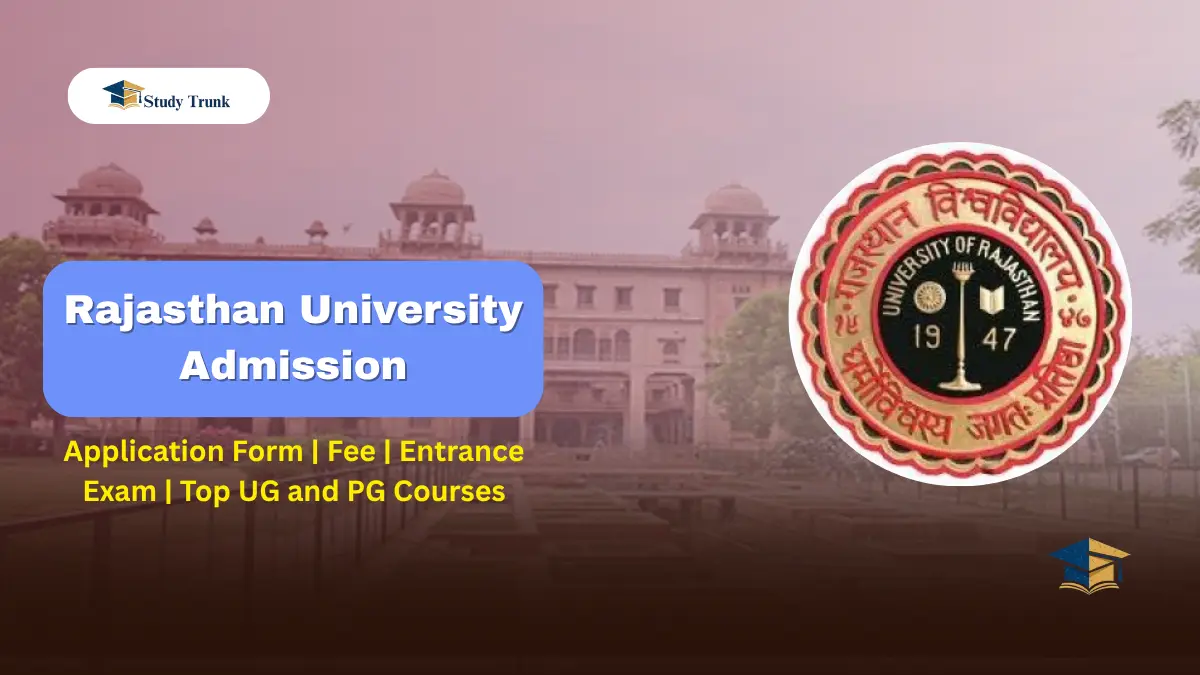
Rajasthan University Admission

Rajasthan University Admission 2025: Application Form, Fee, Entrance Exam, Top UG and PG Courses

Rajasthan University Admission: Getting into a good university is a big step, and this guide is here to make the Rajasthan University admission process simple for you. Rajasthan University is one of the most famous universities in India, and we will walk you through everything you need to know for 2025 admissions.

About Rajasthan University

Rajasthan University (often called Uniraj) is one of the oldest and most respected universities in Rajasthan. It was started in 1947 and is located in Jaipur. The government has given it a very high rating of ‘A+’, which means it is considered an excellent place for higher education. It offers hundreds of courses, so whether you want to do a Bachelor’s degree, a Master’s degree, or a PhD, you have plenty of options.

Rajasthan University Admission Quick Update

Here’s what’s happening right now (as of June 2025):

  • For Master’s Degrees: The application forms for most Master’s courses, which require the URATPG 2025 entrance test, will likely open in the last week of June or the first week of July 2025.
  • For MBA: The admission process for MBA courses, which uses the PIM-MAT 2025 test, has already started.
  • For Bachelor’s Degrees: The application for courses like B.A., B.Com., and B.Sc. will start after all the Class 12 results are out. These admissions are based on your marks.

Important Dates for Rajasthan University Admission

These dates are estimates to help you plan. The final dates will be announced on the university website, so always check there. 

What’s Happening Expected Time (2025)
PG Entrance Test (URATPG) Application Opens Last week of June
PG Entrance Test (URATPG) Application Closes Third week of July
UG Admission (Based on Marks) Application Opens First week of July
PG Entrance Test (URATPG) Exam Date First week of August
PG Entrance Test (URATPG) Result Third week of August
UG Admission First Merit List Last week of July
Final Admission & Document Check August – September

Rajasthan University Admission

Getting into Rajasthan University is simple, as the process depends on the course you choose. For Bachelor’s degrees like B.A., B.Com., and B.Sc., your admission is based directly on your Class 12 marks, and no entrance test is required. However, for higher studies like Master’s degrees (M.A., M.Sc.) and PhDs, you must pass an entrance exam, such as the URATPG, to be selected. No matter which course you apply for, all application forms must be filled out online on the university’s official website. It is very important to look for the specific admission announcement for your course level, as the dates and forms are different for Bachelor’s and Master’s programs.

Rajasthan University Admission Form

You can only get the admission form online from the university’s official website. You cannot get it from an office or by post. Before you start, make sure you have a valid email ID, a working mobile number, and a good internet connection, because the university will send all important messages to you online.

How to apply for Rajasthan University Admission 2025

Applying is easy if you follow these steps:

  1. Go to the Official Website: Open uniraj.ac.in.
  2. Find the Admission Link: Look for a button that says “Admission 2025” and click on it.
  3. Register Yourself: Click on “New User” and create an account using your name, email, and phone number.
  4. Fill the Form: Log in with your new account and carefully fill in all the required details, like your address and marks from previous classes.
  5. Upload Your Documents: You will need to upload scanned copies of your photo and signature. Make sure they are clear and in the correct size.
  6. Pay the Fee: Pay the application fee online using UPI, a debit card, a credit card, or net banking.
  7. Save and Print: After paying, double-check all your details and click “Submit.” Important: Save a PDF copy of the final application page or print it out. You will need this later.

Rajasthan University Admission Documents

Have these documents ready as scanned files on your computer or phone:

  • Your recent passport-size photo.
  • A clear image of your signature.
  • Class 10th mark sheet (to check your date of birth).
  • Class 12th mark sheet.
  • Mark sheets of your Bachelor’s degree (if applying for a Master’s degree).
  • Your Aadhaar Card or other government ID.
  • Caste Certificate (if you belong to SC, ST, OBC, or EWS category).

Rajasthan University UG Admission

Getting admission into a Bachelor’s degree program at the University of Rajasthan is a major goal for students who have completed Class 12. For its most popular and traditional courses—like Bachelor of Arts (B.A.), Bachelor of Science (B.Sc.), and Bachelor of Commerce (B.Com.)—the admission process is straightforward and is primarily based on merit.

Bachelor of Arts (B.A.): The Bachelor of Arts (B.A.) is a three-year undergraduate degree that focuses on humanities and social sciences. This course is all about understanding human society, culture, history, literature, and how people think and interact. It helps you develop strong skills in communication, critical thinking, reading, and writing. It prepares you for a wide range of careers that require a deep understanding of people and society. Political Science, History, Economics, English Literature, Sociology, Psychology, Public Administration, Geography, Hindi Literature

Bachelor of Commerce (B.Com.): The Bachelor of Commerce (B.Com.) is a three-year undergraduate degree focused on the world of business, finance, and accounting. This course teaches you how businesses work, how money is managed, the basics of trade, and the laws related to business and taxes. It is a very practical degree that provides a strong foundation for a corporate or financial career. Accountancy (Financial and Corporate), Business Statistics, Economics, Business Law and Company Law, Income Tax, Auditing, Financial Management

Bachelor of Science (B.Sc.): The Bachelor of Science (B.Sc.) is a three-year undergraduate degree for students with a keen interest in science and technology. The course focuses on understanding the natural world through experiments, observation, and logic. At Rajasthan University, the B.Sc. program is mainly divided into two groups: the Maths group and the Biology group.

Rajasthan University PG Admission 

Getting a Master’s degree from a reputed institution like Rajasthan University can be a great step for your career. The admission process for Postgraduate (PG) courses like M.A., M.Sc., and M.Com. is very different from the UG admission process. Here, your performance in an entrance exam is the most important factor.

Rajasthan University PhD Admission

A Doctor of Philosophy (PhD) is the highest academic degree you can achieve. It is a research-focused program where you become an expert in a specific topic. The admission process for a PhD at Rajasthan University is highly competitive and is designed to select candidates who have strong research potential and a passion for their subject.

Rajasthan University Eligibility Criteria

  • For Bachelor’s Degrees (UG): You must have passed the Class 12 (10+2) exam from a recognized board.
  • For Master’s Degrees (PG): You must have a Bachelor’s degree in a relevant subject from a recognized university.
  • For PhD Programs: You must have a Master’s degree in your chosen subject with at least 55% marks (50% for reserved categories).
  • Minimum Marks (UG): While the minimum to apply for UG courses is around 48-50%, the actual admission cut-offs for top colleges are much higher.
  • Minimum Marks (PG): You generally need at least 50% to 55% in your Bachelor’s degree to be eligible for a Master’s course.
  • Reservation: The university follows the reservation policy of the Government of Rajasthan for all admissions.
  • Final Authority: Always check the official 2025 admission prospectus on the university website for the exact rules for your specific course.

Rajasthan University Entrance Exam

For Master’s Courses (URATPG): This is the main test for Master’s degree courses. It’s a computer-based test with multiple-choice questions about the subject you studied in your Bachelor’s degree.

For MBA Courses (PIM-MAT): If you want to do an MBA, you have to take this specific test. It checks your English skills, logical thinking, and general knowledge.

For PhD Programs (MPAT): To get into a PhD program, you either need to pass the university’s MPAT exam or have already qualified a national exam like UGC-NET/JRF. After the test, there is also an interview.

Rajasthan University Fee Structure

Understanding the fees is a very important part of your admission planning. At Rajasthan University, being a public university, many courses are very affordable. However, the fees can change a lot depending on the course you choose. The main reason for this difference is whether the course is government-aided (gets funding from the government) or self-financed (runs on student fees).

Rajasthan University UG Courses Fees

Course Annual Tuition Fee (₹) Other Charges Total Annual Fee (Approx.)
B.A. (Pass Course) ₹2,000 – ₹3,500 Exam + Library + Development (~₹2,500) ₹4,500 – ₹6,000
B.Com ₹3,000 – ₹4,000 Exam + Activity + Computer (~₹2,500) ₹5,500 – ₹6,500
B.Sc. (Bio/Maths) ₹4,000 – ₹5,500 Science Lab Fee + Exam (~₹3,000) ₹7,000 – ₹8,500
BBA ₹15,000 – ₹25,000 Activity + Placement + Exam (~₹5,000) ₹20,000 – ₹30,000
BCA ₹20,000 – ₹30,000 Computer Lab + Exam (~₹5,000) ₹25,000 – ₹35,000
B.A. Hons/B.Sc. Hons ₹4,000 – ₹6,000 Subject Lab/Dept Charges (~₹3,000) ₹7,000 – ₹9,000

Rajasthan University PG Courses Fees

Course Annual Tuition Fee (₹) Other Charges Total Annual Fee (Approx.)
M.A. (All Subjects) ₹3,000 – ₹5,000 Exam + Library + Cultural (~₹2,000) ₹5,000 – ₹7,000
M.Com ₹4,000 – ₹6,000 Exam + Seminar Charges (~₹2,500) ₹6,500 – ₹8,500
M.Sc. (All Streams) ₹6,000 – ₹10,000 Lab Charges + Project (~₹4,000) ₹10,000 – ₹14,000
M.Ed ₹25,000 – ₹30,000 Practical + Seminar (~₹5,000) ₹30,000 – ₹35,000
MCA (2-Year) ₹30,000 – ₹50,000 Computer Lab + Project (~₹10,000) ₹40,000 – ₹60,000
MBA ₹50,000 – ₹70,000 Placement + Industrial Visit (~₹10,000) ₹60,000 – ₹80,000

Rajasthan University Result

All results, whether for an entrance test or a merit list, will be posted on the official university website (uniraj.ac.in). Go to the “Results” section, find your course, and enter your details like your roll number to see your result. It’s a good idea to download and print your result, as you will need this paper during the final admission steps.

Other University Admission Posts
DG Vaishnav College Admission MDI Gurgaon Admission
Lucknow University Admission Baba Farid University Admission
Calicut University Admission Jadavpur University Admission
PDEU Admission Amity University Noida Admission
Kalyani University Admission Raja Mahendra Pratap University Admission
University of Kashmir Admission Jain University Admission
Delhi University Admission Kerala University Admission
Mumbai University Admission Aligarh Muslim University Admission
Top Distance MBA Colleges in India

Top Distance MBA Colleges in India for 2025: Online Admission Process, Last Date, Fees, Eligibility

Pursuing a Distance MBA in India has become a practical and flexible option for working professionals, entrepreneurs, and fresh graduates. Distance MBA programs in India 2025 have become a cornerstone for professionals and students seeking flexible, high-quality management education. With the rise of digital learning platforms, these programs, approved by the University Grants Commission (UGC) and All India Council for Technical Education (AICTE), offer an accessible pathway to enhance business skills without disrupting work or personal commitments. This comprehensive guide explores the top distance MBA colleges in India for 2025, detailing their highlights, eligibility criteria, fee structures, online admission processes, and application deadlines to help you make an informed choice.

In this guide, explore the top distance MBA colleges in India for 2025, covering everything from admission deadlines to eligibility criteria, fees, and the online application process.

Top Distance MBA Colleges in India

Distance MBA programs, also known as online or correspondence MBA programs, are designed to cater to individuals who cannot attend full-time classes. These programs combine self-study, online learning platforms, and periodic assessments to deliver industry-relevant education. The top colleges for distance MBA in India include institutions recognized for their academic excellence, robust curriculum, and strong placement support. Here’s an overview of some of the top distance learning MBA colleges in India for 2025:

These institutions, often highlighted in searches for top distance learning MBA colleges in India, offer a blend of affordability, flexibility, and quality education, making them ideal for career-driven individuals.

  • Amity University, Noida
  • NMIMS Global Access School for Continuing Education, Mumbai
  • Symbiosis Centre for Distance Learning (SCDL), Pune
  • IGNOU (Indira Gandhi National Open University), New Delhi
  • Chandigarh University, Chandigarh
  • Jamia Hamdard University, New Delhi
  • Annamalai University, Tamil Nadu
  • Lovely Professional University (LPU), Punjab
  • IMTS Institute (Partnered Universities), Noida
  • Jain University, Bangalore

Top Distance MBA Colleges 2025 Highlights

The top distance learning MBA colleges in India for 2025 stand out due to their flexible learning models, industry-aligned curricula, and strong placement assistance. Here are the key highlights.

  • Flexible Learning: Programs are delivered through online platforms, recorded lectures, and self-paced study materials, ideal for working professionals. This flexibility allows students to balance work and education seamlessly.
  • Industry-Relevant Specializations: Offerings include Marketing, Finance, Human Resources, IT, Operations, International Business, and more, ensuring alignment with current market demands.
  • Affordable Fees: Compared to regular MBAs, distance MBA programs have lower fees, ranging from INR 50,000 to INR 2,99,000 for the entire course, making them accessible to a broader audience.
  • Accreditation: All programs are approved by UGC-DEB and AICTE, ensuring credibility and recognition by employers and educational institutions.
  • Placement Support: Many institutes, like Amity and NMIMS, provide virtual job fairs and placement assistance, enhancing career opportunities for graduates.
  • Global Recognition: Universities like Amity have international accreditations, such as WASC (USA), enhancing career prospects abroad and adding value to the degree.

Top Distance MBA Colleges in India

Here’s a detailed look at the top 10 colleges for distance learning MBA in India for 2025, including their unique features, fees, and admission details, ensuring a comprehensive understanding for prospective students:

Rank Institute Overview Fees (INR) Eligibility Highlights
1 Amity University, Noida Ranked #7 in Asia-Pacific by QS, offers 12 specializations like Marketing, Finance 1,99,000 Bachelor’s degree, 40% marks
UGC/AICTE-approved, WASC accreditation, scholarships
2 NMIMS, Mumbai Robust online platform, specializations like Business Analytics 2,10,000 Bachelor’s degree, 50% marks
AICTE-approved, strong placement support
3 SCDL, Pune Offers PGDM equivalent to MBA, specializations like International Business 58,000 Graduate, must clear entrance test
Affordable, strong alumni network
4 IGNOU, New Delhi Largest open university, highly affordable MBA 62,000 Bachelor’s degree, 50% marks (45% reserved)
UGC-approved, low-cost, widely recognized
5 Chandigarh University Online MBA with 8 specializations, including Digital Marketing 65,360 Bachelor’s degree or equivalent
UGC-DEB approved, affordable, optional hard copies
6 Jamia Hamdard University Online MBA with specializations like Finance, Marketing, IT 1,03,000 Bachelor’s degree, 50% marks (45% reserved)
Merit-based, industry-focused, work experience preferred
7 Annamalai University Oldest university, 8 industry-standard specializations 57,000–80,000 Bachelor’s degree
UGC-approved, affordable, globally reputed
8 LPU, Punjab Flexible online MBA, specializations like HR, Finance 1,56,000 Bachelor’s degree, 50% marks
UGC-DEB approved, strong digital platform, placements
9 IMTS Institute, Noida Partners with UGC-approved unis, specializations like Hospital Management 40,000–1,20,000 Bachelor’s degree, 50% marks
Affordable, flexible, multiple university options
10 Jain University, Bangalore Full-time MBA with distance options, requires JET/CAT/MAT scores 1,50,000–2,00,000 Bachelor’s degree, 50% marks, entrance scores
Strong placements, industry-relevant, ISO certified

Top Distance MBA Colleges 2025 Admission Last Date

The admission last dates for the July 2025 session of top distance MBA colleges are as follows, ensuring timely applications given the current date of June 3, 2025:

Institute Admission Last Date
Application Portal
Amity University July 31, 2025
NMIMS June 30, 2025 www.nmims.edu
SCDL August 31, 2025 www.scdl.net
IGNOU June 30, 2025
Chandigarh University June 15, 2025 www.cuchd.in
Jamia Hamdard University July 15, 2025
Annamalai University July 31, 2025
LPU June 15, 2025 www.lpude.in
IMTS Institute June 30, 2025
Jain University July 15, 2025

Note: Deadlines may vary slightly, and some universities offer admissions in multiple sessions (e.g., January and July). Always verify dates on the official websites, such as IGNOU or SCDL, to avoid last-minute issues, especially given the proximity to some deadlines.

Top Distance MBA Colleges Online Admission Process 2025

The online admission process for distance MBA programs in 2025 is streamlined and user-friendly, typically involving the following steps, ensuring accessibility for all:

  • Research and Selection: Visit the official website of the preferred university, such as Amity University, IGNOU, or SCDL.
  • Online Registration: Create a profile on the university’s admission portal, filling in personal details (name, contact number, email) and academic qualifications, ensuring accuracy.
  • Document Submission: Upload scanned copies of required documents, including:
      • Bachelor’s degree certificate and mark sheets
      • 10th and 12th mark sheets
      • Government ID proof (Aadhaar, passport)
      • Passport-size photograph
      • Entrance exam scorecard (if applicable)
      • Work experience certificate (if required)
      • Category certificate (for SC/ST/OBC/EWS, if applicable), ensuring all are within specified size limits.
  • Application Fee Payment: Pay the application fee, such as INR 200 for IGNOU or INR 1,200 for SCDL, via credit/debit card, UPI, or net banking, with options for online payment gateways.
  • Form Submission: Review and submit the application form, saving a copy of the form and fee receipt for future reference, ensuring no errors.
  • Admission Confirmation: Universities verify documents and confirm admission via email or SMS, with some institutes like Jain University requiring candidates to appear for an entrance test (JET) or interview, adding an extra step.
  • Enrollment: Pay the program fees (full or first installment) to secure your seat, then receive access to the online learning platform and study materials, completing the process.

Note: Always check for institute-specific requirements, such as entrance exams or interviews, on the official website to avoid delays.

Top-Ranked Distance MBA Colleges in India 2025

Some institutes even offer LMS-based learning, live sessions, and AI-powered doubt resolution, making them a go-to choice for working professionals. The top MBA colleges in India for distance learning are ranked based on factors like accreditation, curriculum quality, placement records, and global recognition. According to recent rankings, the following stand out:

  • Amity University: #7 in Asia-Pacific by QS, NIRF Rank #32, known for its global accreditation and extensive specializations.
  • NMIMS: Highly regarded for its online platform and placement support, ranked among top private universities for management education.
  • IGNOU: Ranked among the top open universities globally for accessibility and affordability, with a vast network of regional centers.
  • SCDL: Known for its robust alumni network and industry connections, often cited in surveys as a leader in distance learning.
  • Chandigarh University: Recognized for its innovative online learning model, with a focus on digital delivery and student support.

These rankings reflect the institutions’ commitment to delivering high-quality education that aligns with industry demands, ensuring graduates are well-prepared for corporate roles.

Top Distance MBA Colleges Eligibility 2025

Eligibility criteria for top distance MBA colleges in India vary slightly but generally include the following, ensuring inclusivity for diverse candidates:

  • Academic Qualification: A bachelor’s degree (10+2+3/4 pattern) from a UGC-recognized university with a minimum of 50% marks (45% for SC/ST/OBC categories). For example, Amity requires 40% marks, while NMIMS and SCDL require 50%.
  • Entrance Exams: Some institutes, like Jain University, require scores from national exams like CAT, MAT, XAT, or their own tests (e.g., JET). Others, like Amity and IGNOU, offer merit-based admissions without entrance exams, simplifying the process for applicants.
  • Work Experience: Preferred but not mandatory for most programs. Institutes like NMIMS and Jamia Hamdard give preference to candidates with 2+ years of experience, enhancing their application.
  • Additional Requirements: Valid ID proof, academic certificates, and, in some cases, a service certificate for working professionals, ensuring compliance with admission norms.

Always check the specific eligibility criteria on the university’s official website before applying, such as Amity University or SCDL.

Top Distance MBA Colleges Fees 2025

The fee structure for top distance learning MBA colleges in India is significantly lower than regular MBA programs, making them accessible to a wider audience. Below is a summary of fees for 2025, with options for financial planning. Many institutes offer scholarships, EMI options, and loan assistance through partnered banks to ease the financial burden, such as NMIMS offering EMI through HDFC Bank, ICICI Bank, and others.

Institute Total Fees (INR)
Amity University 1,99,000
NMIMS 2,10,000
SCDL 58,000
IGNOU 62,000
Chandigarh University 65,360
Jamia Hamdard University 1,03,000
Annamalai University 57,000–80,000
LPU 1,56,000
IMTS Institute
40,000–1,20,000
Jain University
1,50,000–2,00,000

Why Choose a Distance MBA in 2025?

Pursuing a distance MBA in India offers several advantages, catering to the needs of modern learners:

  • Flexibility: Study at your own pace, balancing work and personal commitments, ideal for those with busy schedules.
  • Cost-Effective: Fees are lower than regular MBA programs, ranging from INR 58,000 to INR 2,10,000, making education accessible.
  • Career Growth: Graduates can secure roles like Marketing Manager, Financial Analyst, or HR Manager with starting salaries of INR 4–7 LPA, enhancing career prospects.
  • Global Recognition: Degrees from accredited universities like Amity and NMIMS are valued by employers worldwide, adding international value.
  • Accessibility: No need to relocate or quit your job, making it ideal for working professionals, with online platforms ensuring convenience.

Tips for Choosing the Right Distance MBA Program

To ensure the best fit, consider the following tips, guiding your decision-making process:

  1. Check Accreditation: Ensure the program is UGC-DEB and AICTE-approved, verifying credibility on official websites like Amity University.
  2. Evaluate Specializations: Choose a specialization aligned with your career goals, such as Business Analytics for tech professionals, reviewing course details online.
  3. Compare Fees and Support: Look for scholarships, EMI options, and placement assistance, with institutes like NMIMS offering EMI through banks, easing financial planning.
  4. Review Learning Platforms: Opt for universities with user-friendly online portals and robust support systems, ensuring a smooth learning experience.
  5. Plan Ahead: Apply early to avoid last-minute issues and secure your preferred specialization, especially with deadlines like June 30, 2025, for IGNOU approaching.
Other University Admission Posts
Distance MBA in Business Analytics Andhra University Distance Education
LLB Distance Education Annamalai University Distance Education
Madras University Distance Education DU SOL Admission
Distance MBA in Business Analytics
Kerala University Admission

Kerala University Admission 2025-26: Application Date, Fee, Eligibility, Entrance Exam, UG and PG Courses

Kerala University Admission  2025: Planning to join one of South India’s most prestigious and historic institutions? The University of Kerala, with its legacy of academic excellence, is a top choice for students aspiring for higher education. The admission process for the 2025-26 academic year is a crucial step for thousands of hopefuls. This comprehensive guide will walk you through everything you need to know, from important dates and eligibility criteria to the application process for UG, PG, and PhD programs. Let’s dive into the details to make your admission journey smooth and successful.

About Kerala University

Established in 1937, the University of Kerala, formerly the University of Travancore, is one of the oldest universities in India. Located in the vibrant city of Thiruvananthapuram, it has been a beacon of learning and research for decades. The university is accredited by NAAC with an ‘A++’ Grade, a testament to its high standards in teaching, research, and infrastructure. It has 43 departments of teaching and research, along with hundreds of affiliated colleges, offering a vast array of courses across various disciplines.

Quick Update for Kerala University Admission 2025

As of June 2025, the official notification for the 2025-26 academic session is yet to be released. The information provided in this guide, including dates, fees, and specific procedures, is based on the previous year’s (2024-25) admission cycle. These details are intended to give you a clear and predictive overview.

Key Expectation:

  • UG Admissions: Will continue to be primarily based on marks from the qualifying Plus Two (+2) or equivalent examinations through a Centralized Allotment Process (CAP).
  • PG Admissions: Will be a mix of merit-based admissions in affiliated colleges and entrance-based admissions for courses in University Departments. The University is expected to continue using its own Kerala University Common Admission Test (KU-CAT) and may also accept CUET-PG scores for certain programs.
Particulars Details
Full Name University of Kerala
Established 1937
Location Thiruvananthapuram, Kerala
Type Public State University
Recognized by UGC (University Grants Commission)
NAAC Accreditation A++ Grade
Campus Area ~359 acres (Kariavattom Campus)
Official Website www.keralauniversity.ac.in
Chancellor Governor of Kerala
Vice-Chancellor Prof. Dr. Mohanan Kunnummal (as of 2025)
Affiliated Colleges 150+ Government, Aided & Self-Financing colleges across Kerala
Faculties 16+ including Science, Arts, Commerce, Law, Education, Engineering, etc.
Popular Courses B.A, B.Sc, B.Com, B.Tech, M.A, M.Sc, MBA, MCA, M.Ed, PhD
Admission Mode Online via Centralized Allotment Process (CAP)
Scholarships Merit-based, SC/ST, Minority, Endowment awards
Student Support Placement Cell, Career Guidance, Women’s Cell, NSS, NCC
Research Offers M.Phil & PhD programs with dedicated research centres

Kerala University Admission 2025

Kerala University offers a streamlined admission process for its diverse range of undergraduate (UG), postgraduate (PG), and doctoral (PhD) programs. The entire process is conducted online through its dedicated admission portal, ensuring transparency and ease of access for applicants. Admission to most courses is managed through a Single Window System known as the Centralized Allotment Process (CAP).

Important Dates for Kerala University Admission 2025-26

The following dates are tentative and based on the 2024 admission schedule. Please refer to the official notification for confirmed dates.

Event Expected UG Dates (2025) Expected PG Dates (2025)
Online Application Start Date Mid-May 2025 Early June 2025
Online Application End Date Mid-June 2025 Late June 2025
Date for Entrance Exam (for PG) July 2025
Trial Allotment Publication Late June 2025 Mid-July 2025
First Allotment Publication Early July 2025 Late July 2025
Fee Payment for First Allotment Early–Mid July 2025 Late July – Early August 2025
Subsequent Allotments July – August 2025 August 2025
Commencement of Classes August 2025 Late August 2025

How to Get Admission in Kerala University?

The application process is completely online. Follow these steps carefully:

  1. Visit the Official Portal: Go to the Kerala University Admissions website: admissions.keralauniversity.ac.in.
  2. Registration: Click on the “Click here for Registration” link. You will need a valid email address and mobile number to receive an application number and password.
  3. Log In: Use the application number and password to log in and start the application process.
  4. Fill the Application Form: Enter your personal, academic, and contact details accurately.
  5. Upload Documents: Scan and upload recent passport-size photographs, your signature, and relevant academic documents (like +2 mark sheets) in the prescribed format and size.
  6. Course/College Selection: Carefully select the courses and colleges you wish to apply for in order of preference.
  7. Pay Application Fee: Pay the required application fee through the online payment gateway (Credit Card, Debit Card, or Net Banking).
  8. Final Submission: Verify all details entered in the form before final submission. Once submitted, you cannot edit the details.
  9. Print Confirmation: Take a printout of the completed application form and fee receipt for your future reference.

Kerala University UG Admission

Admission to the majority of Bachelor’s degree programs (like B.A., B.Sc., B.Com, BBA, BCA) in government, aided, and self-financing colleges affiliated with Kerala University is conducted through the Centralized Allotment Process (CAP).

  • Basis of Admission: Admission is based on the index marks calculated from the scores obtained in the qualifying examination (Plus Two/HSC).
  • No Entrance Exam: For most conventional UG courses, there is no separate entrance examination.
  • Allotment: The university publishes a series of allotments (Trial, First, Second, etc.). Students who are allotted a seat must pay the admission fee online to confirm their seat and then report to the respective college.

Kerala University PG Admission

Admission to Postgraduate (PG) programs at Kerala University is managed through a streamlined online Centralized Allotment Process (CAP). The selection criteria depend on whether the course is in an affiliated college or a direct university department. While most colleges rely on merit, university departments require candidates to qualify in an entrance test.

  • Merit-Based Admission: For PG courses in most affiliated government and aided colleges, admission is based on the index marks obtained in the qualifying Bachelor’s degree.
  • Entrance-Based Admission: Admission to all PG programs offered directly by the University’s own departments is strictly through the Kerala University Common Admission Test (KU-CAT).
  • CUET-PG Scores: For certain specified programs, the university may also accept scores from the national-level Central University Entrance Test (CUET-PG). Applicants should verify this in the official prospectus.
  • Online Process: The entire application, option registration, and allotment process is conducted online via the university’s official admissions portal.

Kerala University PhD Admission

Securing a spot in a Doctor of Philosophy (PhD) program at Kerala University involves a competitive selection process designed to evaluate a candidate’s research aptitude. The admission is primarily based on performance in an entrance test and an interview.

  • Core Process: The standard admission route consists of a university-conducted written entrance examination followed by a personal interview.
  • Entrance Test Exemption: Candidates who have already qualified for national fellowships or tests like UGC-NET (including JRF), UGC-CSIR-NET, SLET, GATE, or hold an M.Phil degree are typically exempted from the written test but are still required to appear for the interview.
  • Final Selection: The final rank list is prepared based on a consolidated score from the written test and the interview, ensuring a holistic evaluation.
Specialization (Full-time / Part-time) Duration
Aquatic Biology and Fisheries Min. 3 years – Max. 6 years (Full-time); Part-time
Archaeology 3 – 6 years
Biochemistry 3 – 6 years
Biotechnology 3 – 6 years
Botany 3 – 6 years
Chemistry 3 – 6 years
Commerce 3 – 6 years
Computational Biology & Bioinformatics 3 – 6 years
Demography 3 – 6 years
Economics 3 – 6 years
Education 3 – 6 years
English 3 – 6 years
Environmental Science 3 – 6 years
Geography 3 – 6 years
Geology 3 – 6 years
Hindi 3 – 6 years
Islamic Studies 3 – 6 years
Linguistics 3 – 6 years
Mathematics 3 – 6 years
Optoelectronics 3 – 6 years
Physical Education 3 – 6 years
Physics 3 – 6 years
Political Science 3 – 6 years
Psychology 3 – 6 years
Public Administration 3 – 6 years
Russian 3 – 6 years
Social Work 3 – 6 years
Sociology 3 – 6 years
Statistics 3 – 6 years
Tamil 3 – 6 years
Zoology 3 – 6 years
Performing & Visual Arts (Theatre, Film, Visual Arts) 3 – 6 years; estimated per general regulation

Kerala University Eligibility Criteria

  • UG Courses: Candidates must have passed the Higher Secondary Examination (Plus Two) of the Kerala State Board or any other examination recognized as equivalent, with a specified minimum percentage (typically around 45-50%, with relaxations for reserved categories).
  • PG Courses: Applicants must hold a Bachelor’s degree in the relevant subject under the 10+2+3 pattern from the University of Kerala or any other recognized university. A minimum percentage of marks (usually 50% to 55%) is required.
  • PhD Courses: A Master’s degree or a professional degree recognized as equivalent in the relevant discipline with at least 55% marks in aggregate (50% for SC/ST/OBC candidates) is the minimum eligibility.

Kerala University Fee Structure

The fee structure at Kerala University is known for its affordability, though it varies significantly based on the program and the type of institution. A clear distinction exists between the nominal fees at government/aided colleges and the higher fees at self-financing colleges.

Course Duration Total Tuition Fee (INR)
Undergraduate (UG) 3–5 yrs ₹ 60,000 (B.A./B.Com)–₹ 60,000 (B.Sc); ₹ 3 lakh (B.Tech)
B.Tech 4 yrs ₹ 3,00,000 total
B.Com 3 yrs ₹ 51,860 total (₹ 13,425 1st‑yr)
BBA 3 yrs ₹ 72,000 total
BCA 3 yrs ₹ 75,000 total
B.Ed 2 yrs ₹ 65,850 total
MCA 3 yrs ₹ 75,000 total
MBA 2 yrs ₹ 1,00,000 total
M.Sc / M.A 2 yrs ₹ 3,246–22,480 total (varies by specialization)

Kerala University Entrance Exam

Kerala University primarily conducts its own entrance exams for specific courses.

  • KU-CAT (Kerala University Common Admission Test): This is the main entrance exam for admission to various PG programs offered in the University’s teaching departments. The exam consists of Multiple-Choice Questions (MCQs) based on the syllabus of the relevant undergraduate program.
  • PhD Entrance Test: This test is for admission to doctoral programs. It typically comprises two parts: Part A on Research Methodology and Part B on the specific subject.
  • CUET-PG: For certain PG programs, the university may use CUET-PG scores. Aspirants for these courses must register for the CUET-PG exam conducted by the National Testing Agency (NTA) separately.

Hostel & Miscellaneous Fees

  • Hostel (per annum): ₹ 10,000–18,000 (depending on room sharing)
  • Mess Charges: ~₹ 30,000/yr for all room types
  • Other Charges: ~₹ 3,000/yr

Additional University Fees

  • Registration/Search Fees:
    • UG: ₹ 350 + search
    • PG: ₹ 450 + search
    • Professional UG: ₹ 450 + search
    • Professional PG: ₹ 640 + search

M.Phil / PhD / Postdoc: ₹ 640–760 + search fee